
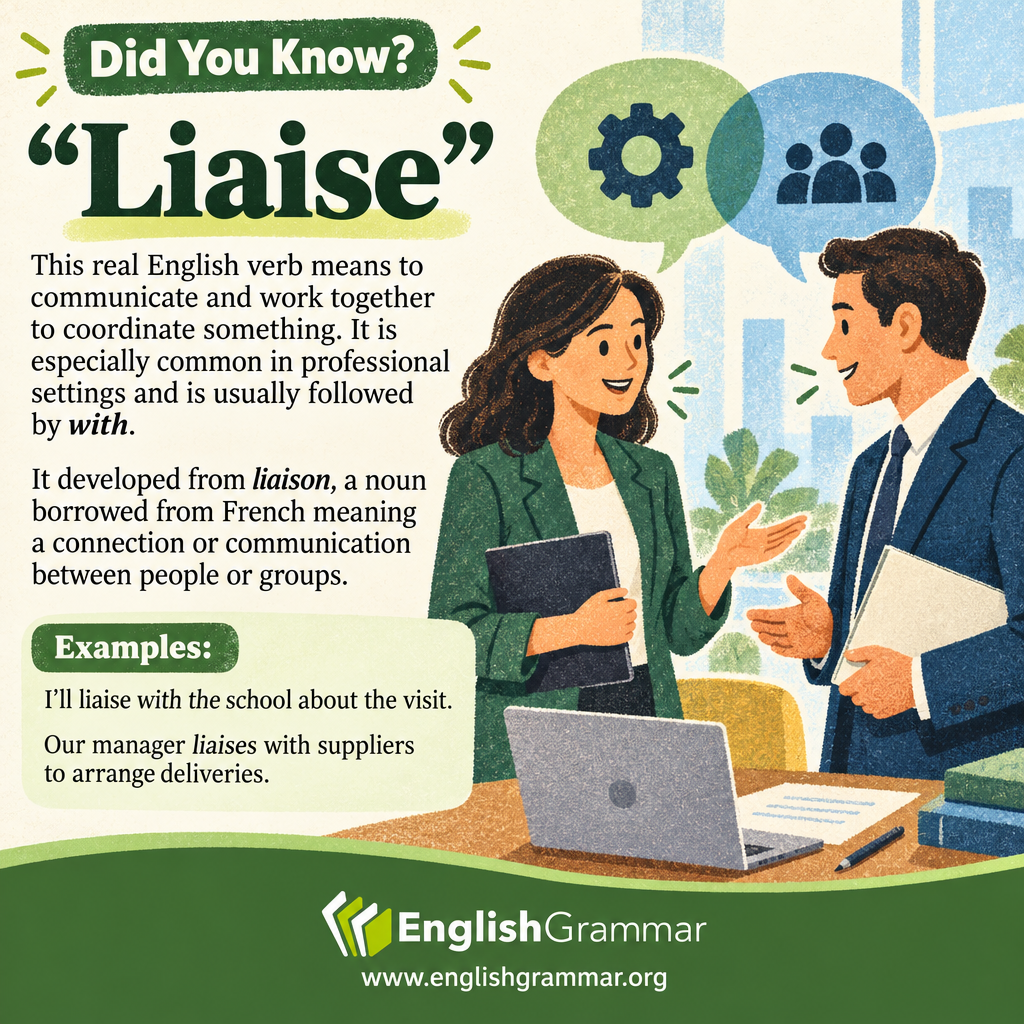
This established English verb means to communicate and work together so that plans, information, or activities are coordinated. It is especially common in professional settings, where different people or teams need to keep one another informed.
For example, organising a school trip might involve checking arrangements with a transport company, passing on the school’s requirements, and confirming collection times. The verb describes that ongoing contact and cooperation, rather than just one conversation.
A useful pattern is the verb followed by with, then the person or group you communicate with. You can add about or on to introduce the matter being discussed:
- Please liaise with the transport company about the collection time.
- Our designer will liaise with the printer on the final layout.
The word developed from liaison, a noun borrowed from French that can mean a connection or communication between people or groups. English speakers formed the verb from that noun. This helps explain why the two words look related.
Watch the spelling: the base form ends in -aise, not -ase. The past form is liaised, and the -ing form is liaising, with the final e dropped.
In casual conversation, talk to, check with, or work with may sound simpler. Choose the wording that fits your situation: this verb is useful when you want to emphasise coordination, not merely speaking to someone.