
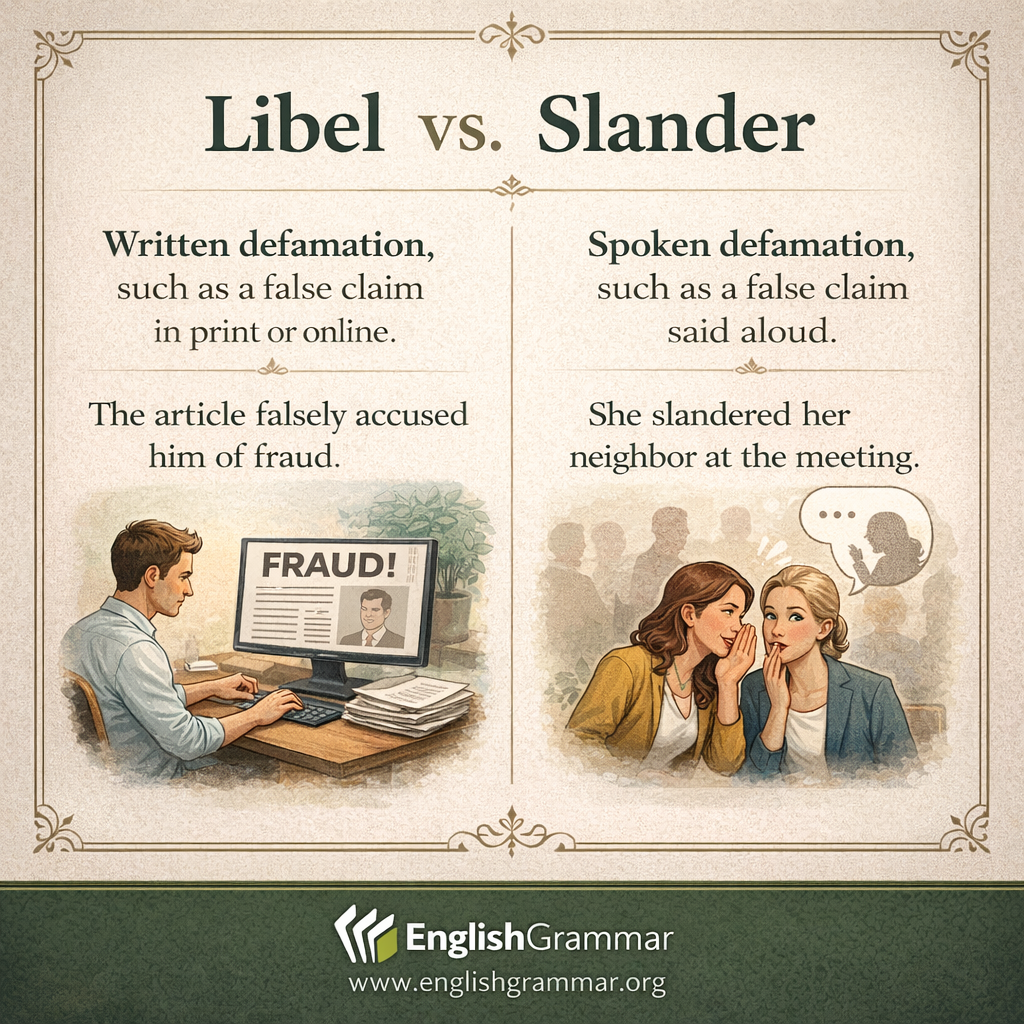
Libel and slander both refer to defamation, which means making a false statement that harms someone’s reputation. The key difference is the form the statement takes.
Libel is defamation in a written or fixed form. That includes newspapers, books, posts online, emails, or even broadcasts that are recorded and replayed. Example: The article falsely accused him of fraud.
Slander is defamation that is spoken aloud. It usually refers to words said in conversation, speeches, meetings, or other temporary spoken settings. Example: She slandered her neighbor at the meeting.
A simple way to remember the contrast is this: if the harmful false statement is written or published, use libel. If it is spoken, use slander.
- Use libel for print, text, and posted content.
- Use slander for spoken remarks.
- Both involve false statements that damage reputation.