
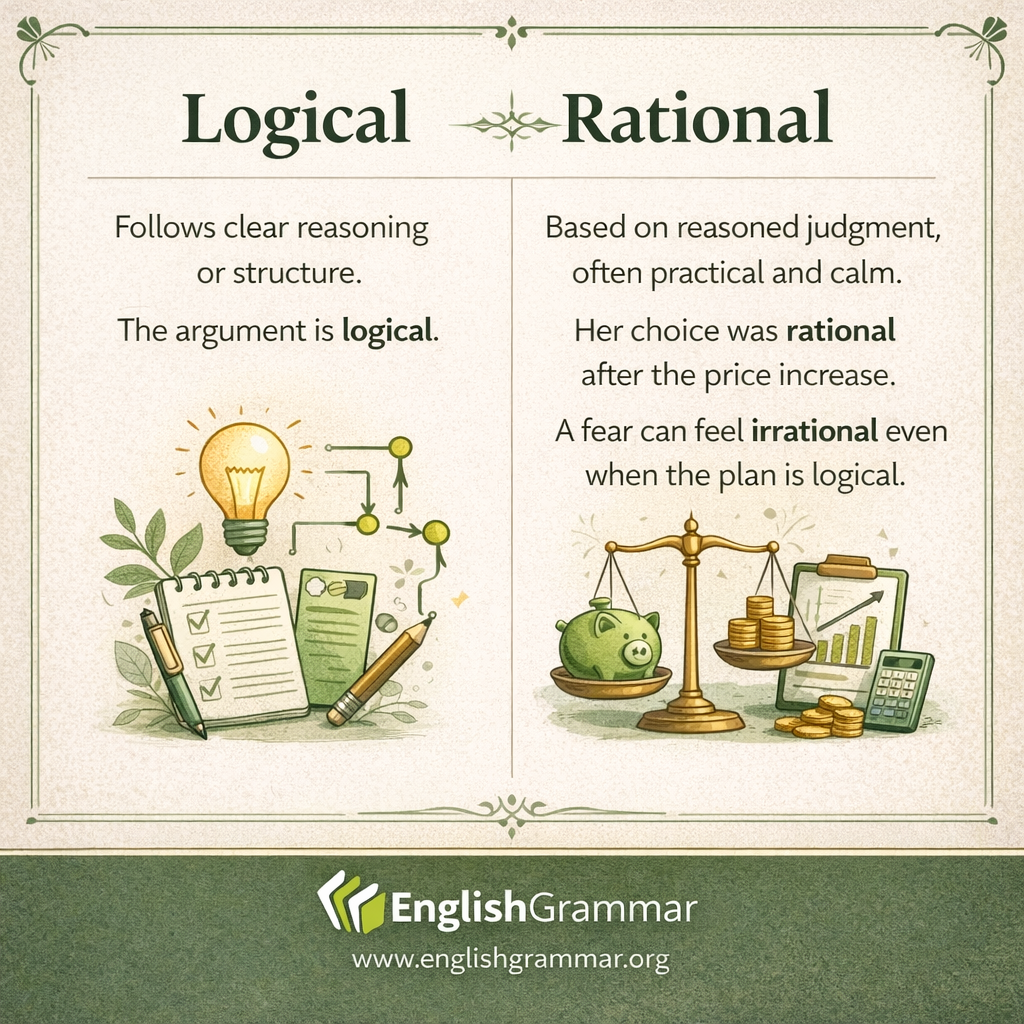
Logical and rational are close in meaning, but they are not identical. Logical describes something that follows clear reasoning, rules, or structure. If the steps make sense and connect properly, it is logical.
Rational usually describes judgment, decisions, or behavior that are reasonable and sensible. It often suggests calm thinking, especially in real life situations where emotions, costs, or risks matter.
A useful way to separate them is this: something can be logical in structure, while a person is rational in choice. For example, The argument is logical means the reasoning holds together. Her choice was rational after the price increase means the decision was sensible in context.
The two words can overlap, but the focus changes:
- Logical: about reasoning, sequence, and internal consistency.
- Rational: about sound judgment, practicality, and reasonableness.
This difference also helps with opposites. Illogical means the reasoning does not make sense. Irrational often means a belief, reaction, or action is not guided by reasonable judgment. For instance, a fear may feel irrational even if someone can describe it in a logical way.