
• Skip to primary navigation
  • Skip to main content
  • Skip to primary sidebar
Home of English Grammar
  • Home
  • Course
  • Exercises
  • Grammar Rules
  • Matches
  • Posts
  • Tools
    • Grammar Checker
    • Very Replacer
    • Word Counter
  • Vocabulary Lists
  • Archives
    • Social Media Posts
    • Writing Guides
  • Join free

What “make waves” means and where it comes from

October 1, 2026

The origin of "make waves"

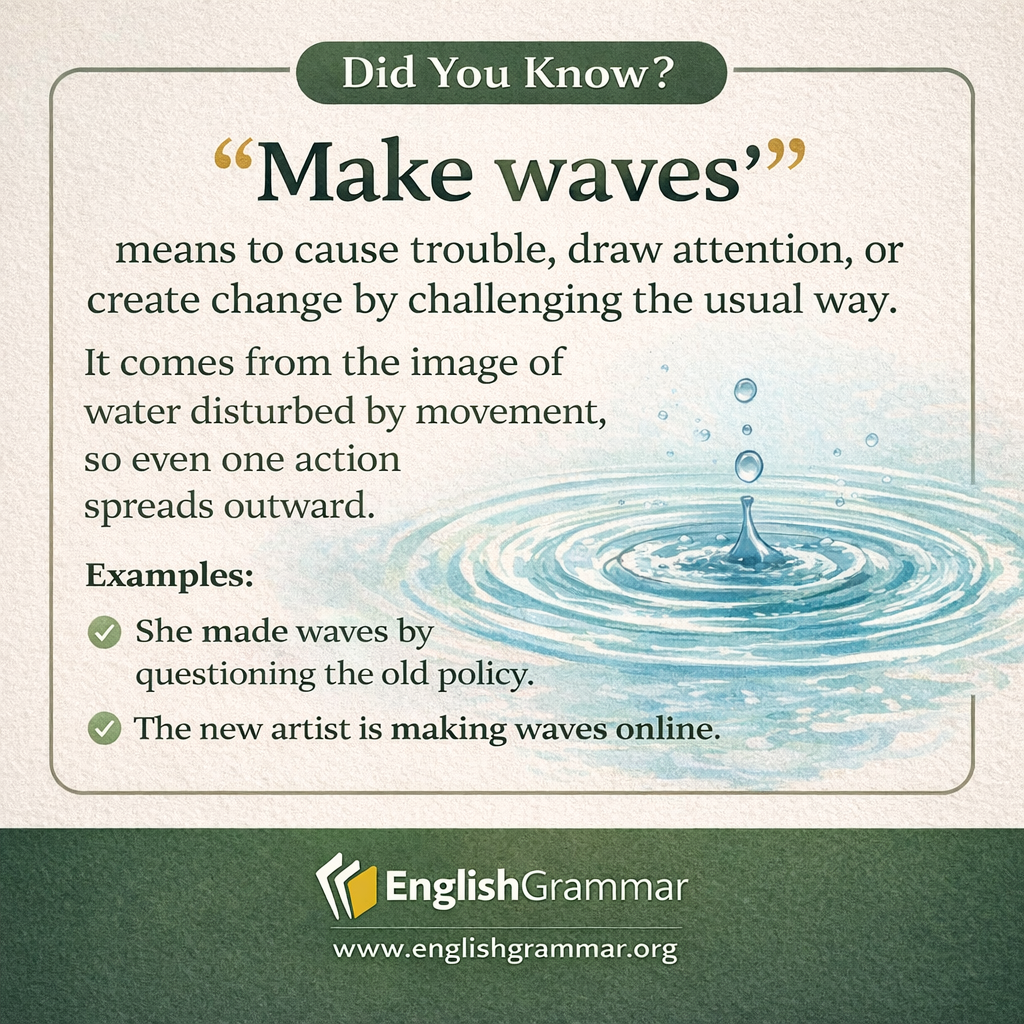
Make waves is an idiom that usually means causing a noticeable effect by challenging what is normal. Depending on context, it can sound negative, positive, or neutral.

The image behind it is simple: when something moves through still water, it creates waves that spread outward. In the same way, one person, idea, or action can disturb a calm situation and affect other people. That is why the expression often suggests visible consequences, not quiet or private change.

People use it in two common ways:

  • To cause trouble or upset, especially by refusing to stay quiet or follow the usual pattern.
  • To attract attention by doing something bold or new, especially in business, art, sports, or public life.

For example, She made waves by questioning the old policy suggests disruption inside a group. But The startup is making waves in the industry suggests exciting impact and growing attention.

So the tone depends on the situation. If someone dislikes disruption, make waves may sound critical. If they admire bold change, it may sound like praise.

Improve your English grammar, vocabulary and writing

We take you step by step from beginner to advanced, even if you struggled with English at school or have always had trouble remembering the rules.

  • 10 modules, 105 lessons and 688 questions
  • Just log in and learn anytime and anywhere
  • Your progress is saved in your account
  • Download the 2027 Grammar Guide (PDF)
Join free

Already have an account? Sign in

See what’s in the course

Primary Sidebar

2.4M761.4K165.8K

Free 2027 Grammar Guide

  • Download Grammar Guide (PDF)
  • Online grammar course, A1 to C2
  • Weekly exercises and vocabulary
  • Join over 3 million English learners

We respect your privacy. Unsubscribe anytime.

Already have an account? Sign in

Grammar Checker - Try Now

Latest Posts

  • 100 Best Synonyms for “Proposition” October 23, 2026
  • 100 Best Synonyms for “Stagnation” October 23, 2026
  • 100 Best Synonyms for “Dumb” October 23, 2026
  • The origin and meaning of “off the cuff” October 23, 2026
  • 100 Phrases for Declining Requests at Work Politely October 23, 2026
  • 100 Best Synonyms for “Plausible” October 23, 2026
  • Maybe, perhaps, possibly, conceivably, probably and definitely: How to choose October 23, 2026
  • Endemic vs. pandemic: what is the difference? October 23, 2026
  • What Clauses Exercise October 23, 2026
  • 100 Best Synonyms for “Clunky” October 23, 2026
Home of English Grammar

Free English grammar exercises, rules and vocabulary lists, with new exercises every week. Join the leading English grammar site with over 3 million followers.

Join free

Learn

  • Exercises
  • Matches
  • Grammar rules
  • Vocabulary lists
  • Writing guides
  • Online tools

More

  • Top social media posts
  • Various posts
  • Contact

Account

  • Join free
  • Grammar Course
  • Free grammar guide (PDF)

Copyright © 2026 EnglishGrammar.org

  • Disclaimer
  • Privacy policy
  • Terms
  • Sitemap