
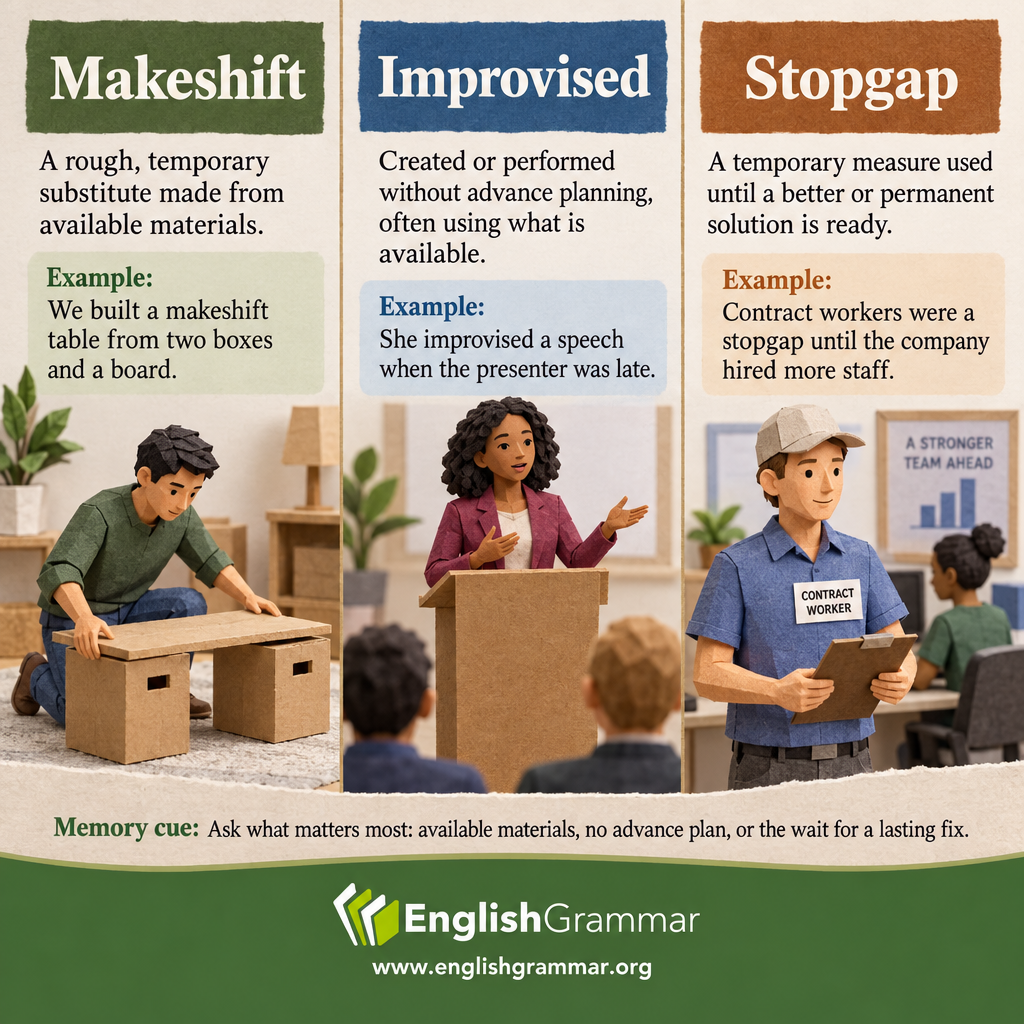
Makeshift, improvised, and stopgap can all describe responses to an immediate problem, but each word emphasizes something different.
Use makeshift for a temporary substitute made from whatever is available. It often suggests that the result is rough or less suitable than the proper item. For example, We used a stack of books as a makeshift laptop stand.
Use improvised when something is created, performed, or arranged without advance planning. It may use available materials, but it does not have to be temporary or inadequate. For example, She improvised a speech after the guest speaker canceled. Music, comedy, and performances can also be improvised.
A stopgap is a temporary measure used until a better or permanent solution is ready. The focus is not necessarily on rough materials or a lack of planning; the key idea is filling a short-term need. For example, The temporary bridge is a stopgap until construction ends.
One solution can fit more than one term, depending on the point you want to emphasize:
- A blanket hung over a broken window can be makeshift because it substitutes for proper glass.
- It can be improvised if someone thought of it on the spot.
- It can be a stopgap if it remains there only until the window is repaired.
Choose the word that matches your focus: the rough substitute, the lack of planning, or the wait for a lasting fix.