
• Skip to primary navigation
  • Skip to main content
  • Skip to primary sidebar
Home of English Grammar
  • Home
  • Course
  • Exercises
  • Grammar Rules
  • Matches
  • Posts
  • Tools
    • Grammar Checker
    • Very Replacer
    • Word Counter
  • Vocabulary Lists
  • Archives
    • Social Media Posts
    • Writing Guides
  • Join free

What “march to the beat of your own drum” means, and where it comes from

October 2, 2026

The origin of "march to the beat of your own drum"

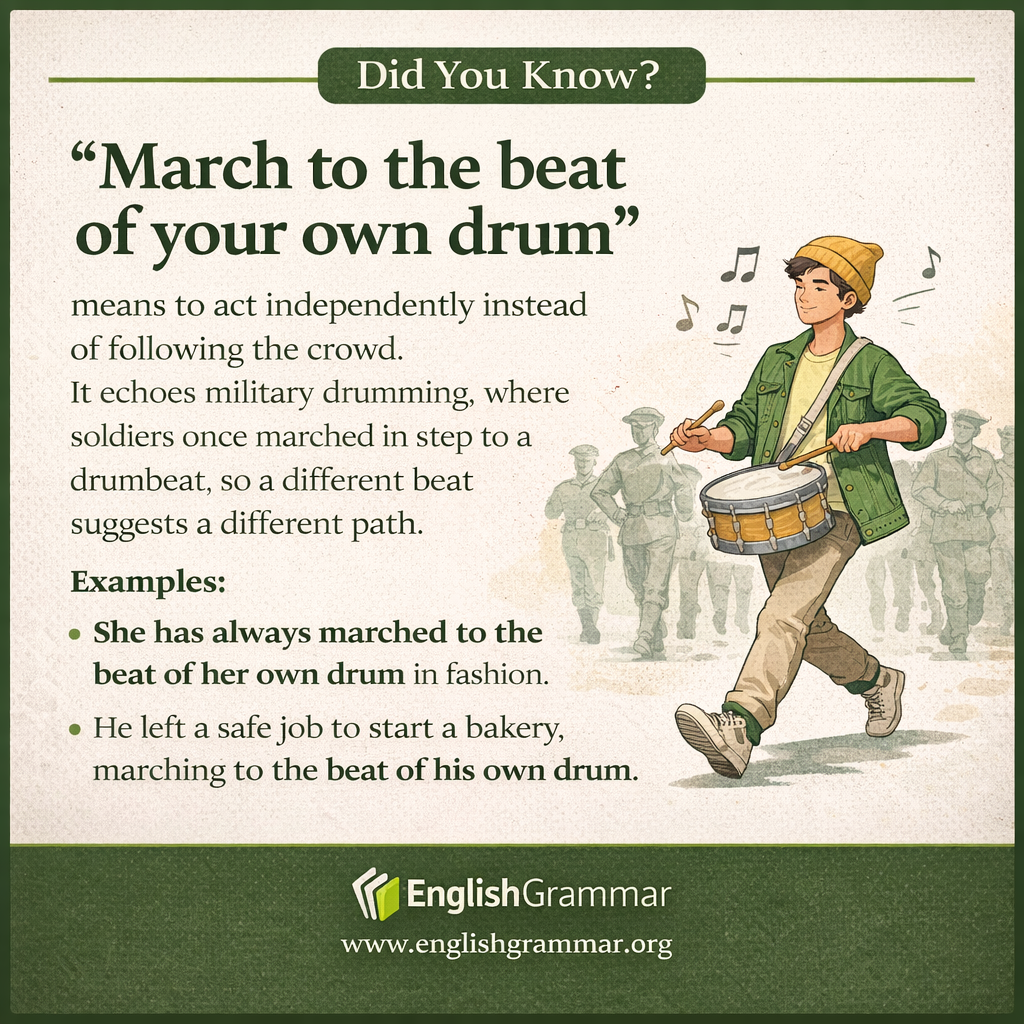
“March to the beat of your own drum” means to live, think, or act independently instead of simply doing what everyone else does. It is usually positive. It often suggests confidence, originality, and a willingness to choose a personal path.

The image comes from marching in step. In military settings, drums were used to keep soldiers moving together at the same rhythm. If someone follows a different beat, that person is not moving with the group. That physical image helps explain the modern meaning of the expression.

People use it for personality, style, work, and life choices. It can describe someone who dresses differently, has unusual interests, or makes a bold decision that others would avoid.

  • She marched to the beat of her own drum and studied art when her friends chose business.
  • My uncle has always marched to the beat of his own drum, and that independence helped him build a very original career.

This expression is close in meaning to be your own person or do things your own way. The tone is often admiring, not critical.

Improve your English grammar, vocabulary and writing

We take you step by step from beginner to advanced, even if you struggled with English at school or have always had trouble remembering the rules.

  • 10 modules, 105 lessons and 688 questions
  • Just log in and learn anytime and anywhere
  • Your progress is saved in your account
  • Download the 2027 Grammar Guide (PDF)
Join free

Already have an account? Sign in

See what’s in the course

Primary Sidebar

2.4M761.4K165.8K

Free 2027 Grammar Guide

  • Download Grammar Guide (PDF)
  • Online grammar course, A1 to C2
  • Weekly exercises and vocabulary
  • Join over 3 million English learners

We respect your privacy. Unsubscribe anytime.

Already have an account? Sign in

Grammar Checker - Try Now

Latest Posts

  • 100 Best Synonyms for “Proposition” October 23, 2026
  • 100 Best Synonyms for “Stagnation” October 23, 2026
  • 100 Best Synonyms for “Dumb” October 23, 2026
  • The origin and meaning of “off the cuff” October 23, 2026
  • 100 Phrases for Declining Requests at Work Politely October 23, 2026
  • 100 Best Synonyms for “Plausible” October 23, 2026
  • Maybe, perhaps, possibly, conceivably, probably and definitely: How to choose October 23, 2026
  • Endemic vs. pandemic: what is the difference? October 23, 2026
  • What Clauses Exercise October 23, 2026
  • 100 Best Synonyms for “Clunky” October 23, 2026
Home of English Grammar

Free English grammar exercises, rules and vocabulary lists, with new exercises every week. Join the leading English grammar site with over 3 million followers.

Join free

Learn

  • Exercises
  • Matches
  • Grammar rules
  • Vocabulary lists
  • Writing guides
  • Online tools

More

  • Top social media posts
  • Various posts
  • Contact

Account

  • Join free
  • Grammar Course
  • Free grammar guide (PDF)

Copyright © 2026 EnglishGrammar.org

  • Disclaimer
  • Privacy policy
  • Terms
  • Sitemap