
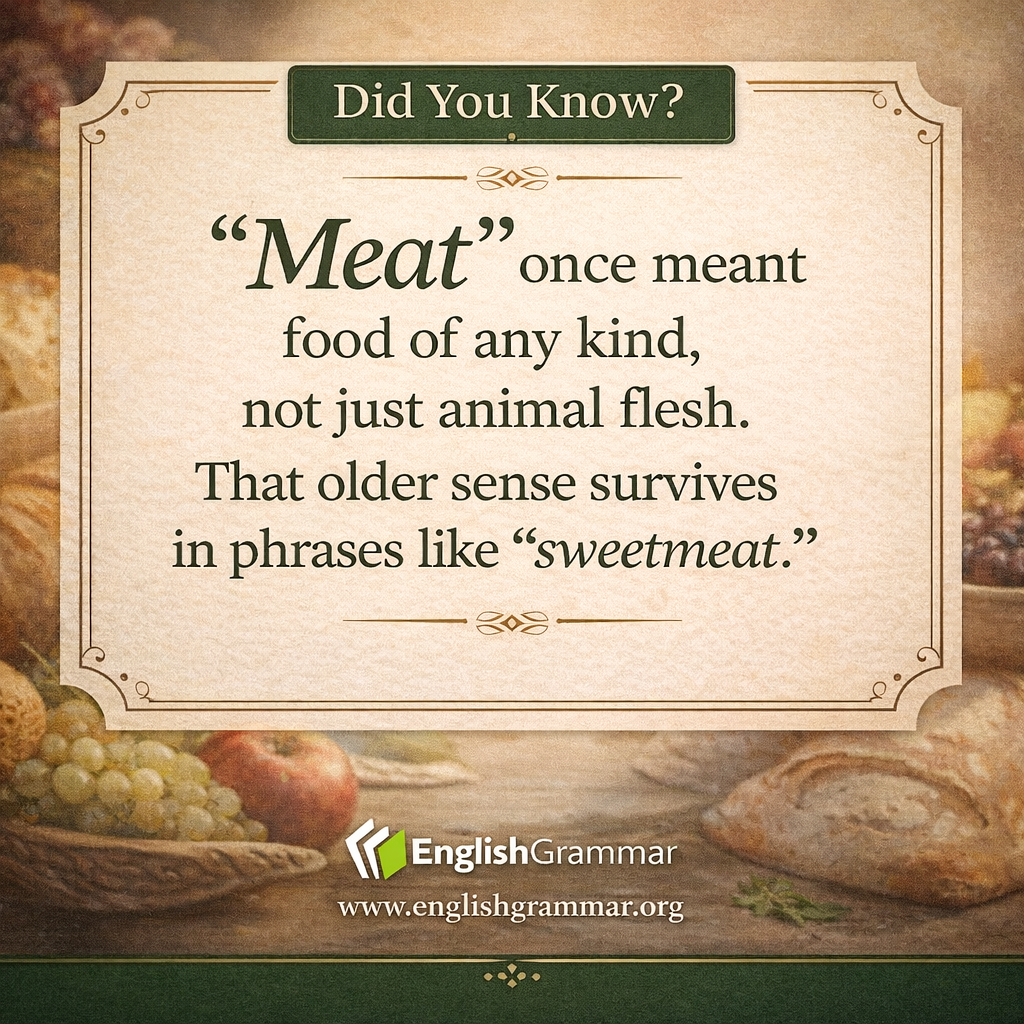
Meat did not always mean animal flesh. In older English, it could mean food in general, or the solid part of food. Over time, the meaning became narrower, and in modern everyday English it usually means the flesh of animals eaten as food.
This kind of change is common in language. A broad word can slowly take on a more specific meaning as usage shifts. With meat, the older sense stayed alive in a few expressions even after the main meaning changed.
- Sweetmeat originally meant a sweet food, especially candy or a confection, not sweet animal flesh.
- Nutmeat still means the edible part inside a nut.
- In older texts, a phrase like meat and drink could simply mean food and drink.
So if you see meat in historical writing, do not assume it refers only to beef, pork, or chicken. In many cases, it simply meant food. That older meaning helps explain why some related words and phrases look unusual to modern readers.