
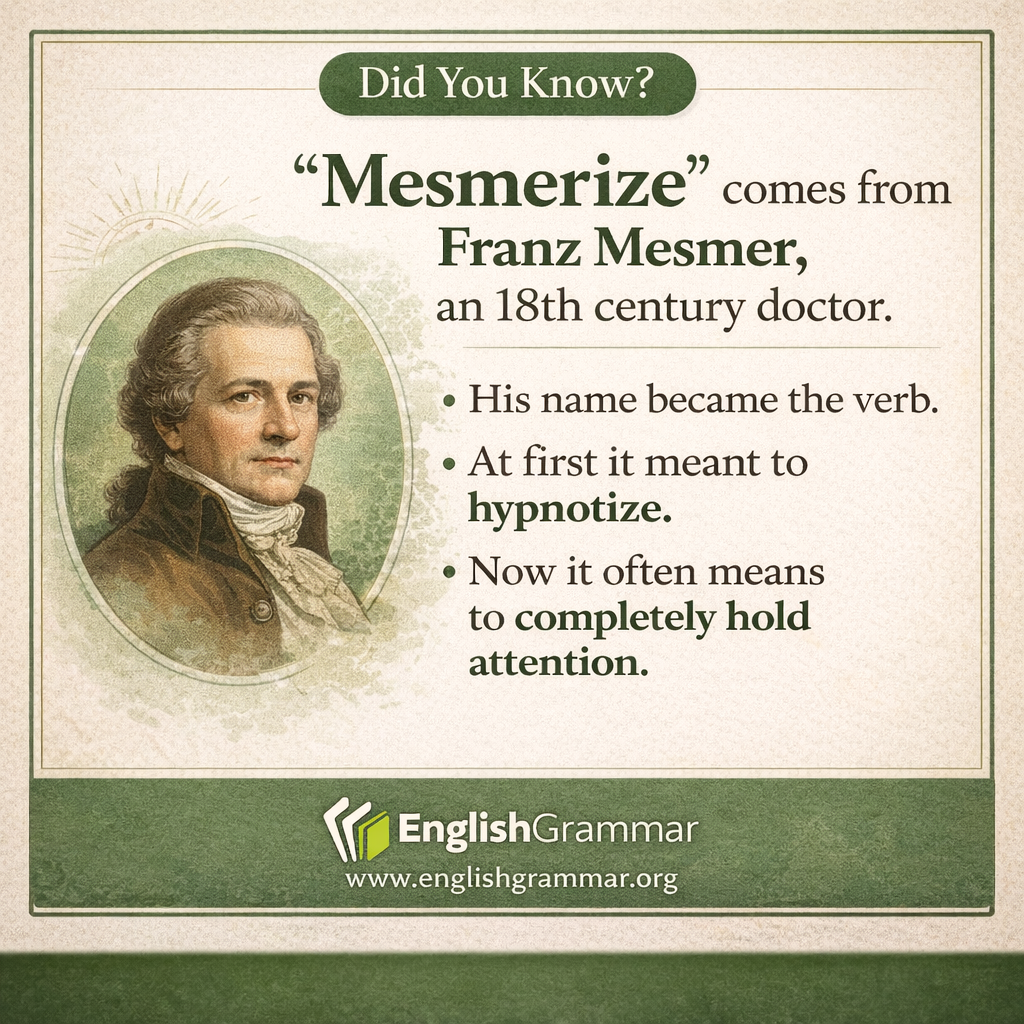
Mesmerize comes from Franz Mesmer, an 18th century German doctor. Mesmer promoted a theory he called animal magnetism, and his methods became widely associated with trance like states and hypnosis.
Because of that connection, English speakers turned his surname into the verb mesmerize. The earliest sense was close to hypnotize or put into a trance.
Over time, the meaning broadened. Today, people often use mesmerize more loosely to mean capture someone’s full attention or fascinate deeply, even when no hypnosis is involved.
- Older sense: “The performer seemed to mesmerize the audience into silence.”
- Common modern sense: “The northern lights mesmerized the travelers.”
This kind of word history is not unusual in English. Sometimes a person’s name becomes a common word when their ideas, inventions, or public image leave a strong mark on the language.