
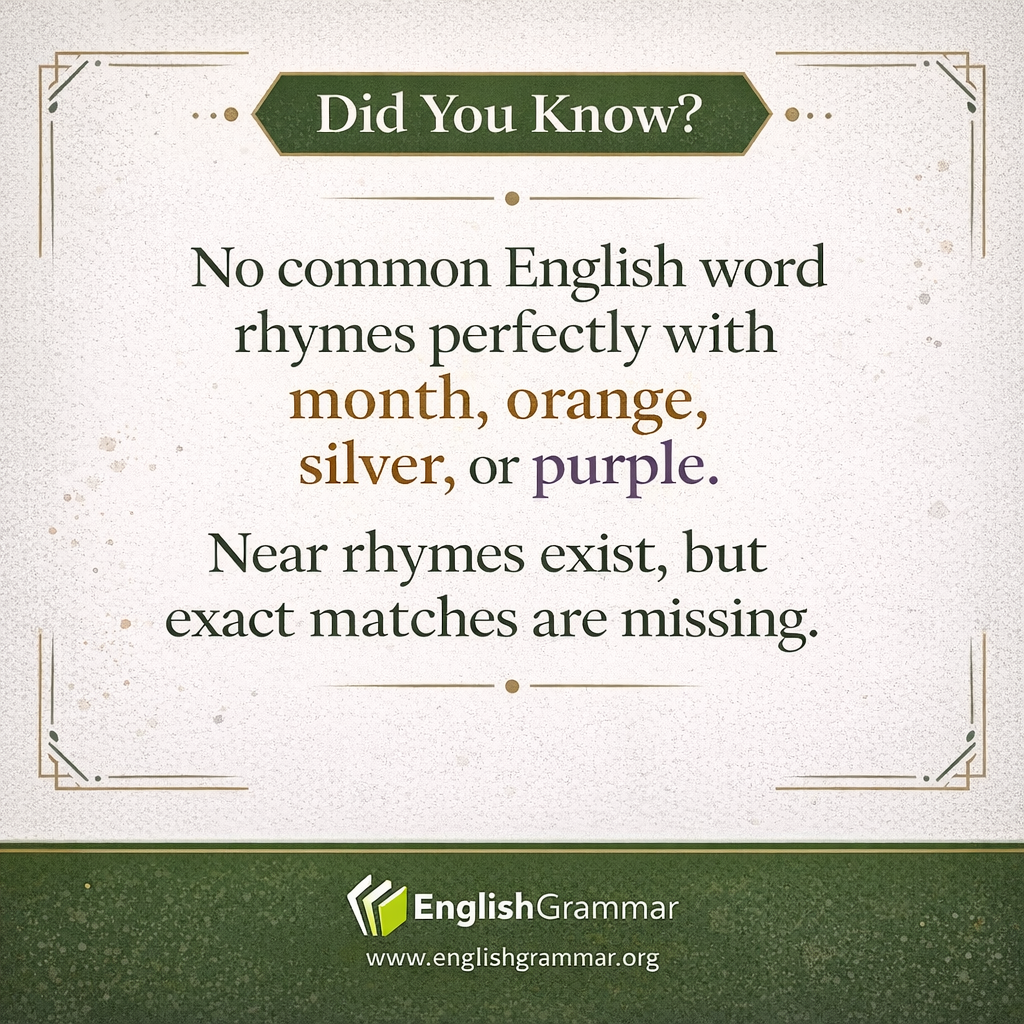
Some words in English are famous for having no perfect rhyme, including “month,” “orange,” “silver,” and “purple.” A perfect rhyme means the ending sounds match exactly, especially the stressed vowel and the sounds that follow it.
Why does this happen? English vocabulary comes from many different languages, and its sound patterns are not perfectly regular. Some word endings are simply very rare. That makes it hard, or impossible in ordinary use, to find another word with the same final sound pattern.
For example, orange has near rhymes such as door hinge in some accents, but that is not a single standard English word. Month can be loosely paired with oneth in playful or poetic writing, but that form is not common modern English.
Compare that with a word like light, which has many clear rhymes: night, bright, and sight. In other words, rhyming depends on sound patterns, not spelling.
- Perfect rhyme: light, night
- Near rhyme: orange, door hinge
- Key point: some English sound endings are too uncommon to produce a standard exact rhyme
