
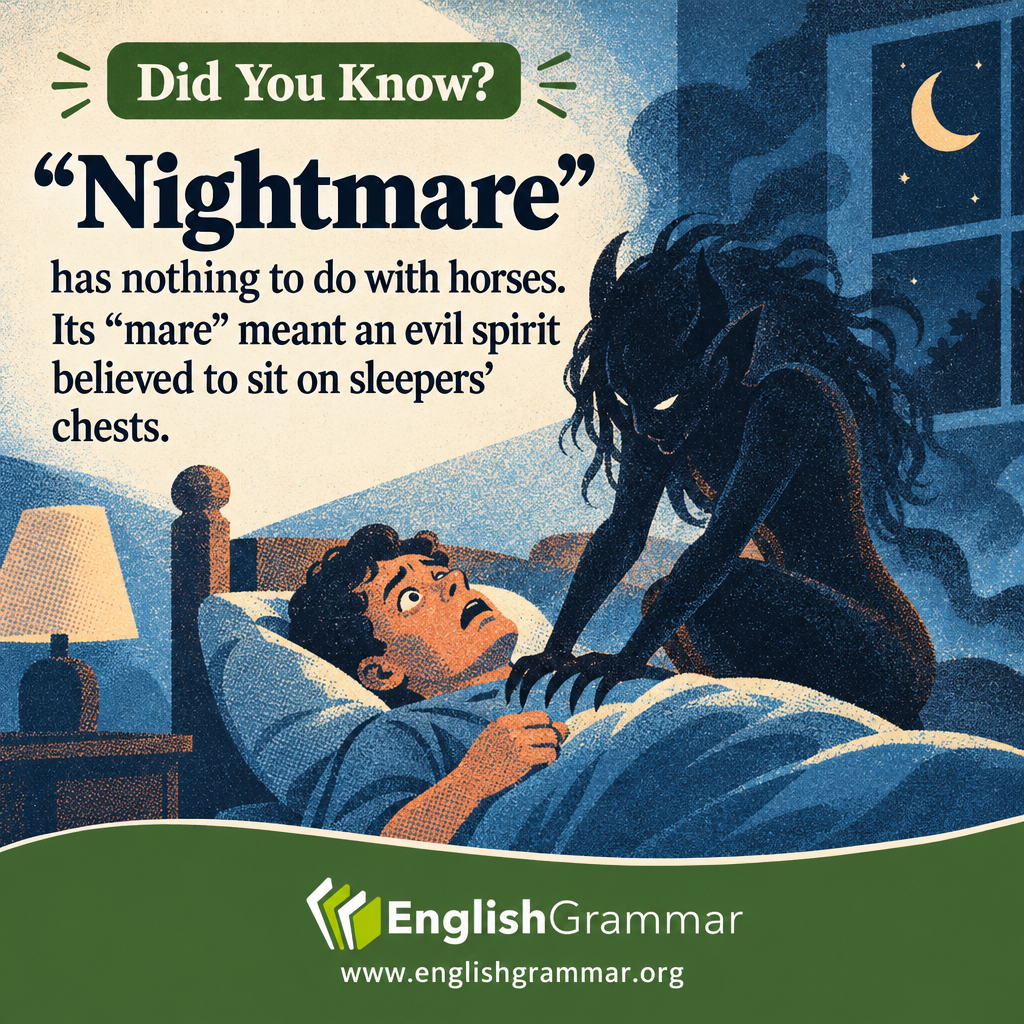
“Nightmare” has nothing to do with horses. The second part comes from an old word for an evil spirit believed to trouble people while they slept. In traditional beliefs, this spirit could sit on a sleeper’s chest, causing pressure, fear, and difficulty breathing.
The confusion is understandable: in modern English, mare means a female horse. But the horse word and the spirit word have different origins. They happen to share a spelling; the animal is not part of the dream word’s history.
This makes the word’s history different from its everyday meaning. Today, a nightmare is a frightening or deeply unpleasant dream. You do not need to know the old belief to use the word naturally.
- Example: “I had a nightmare about being lost in a dark forest.” Here, the word describes a frightening dream.
- Contrast: “The mare stood beside her foal.” Here, mare means a female horse, not a spirit.
The historical belief also resembles some experiences reported during sleep paralysis, when someone may feel awake but unable to move. That resemblance does not mean every frightening dream involves sleep paralysis, or that we can identify the cause of every old account. The language point is simpler: the familiar-looking ending preserves an old spirit word, not a reference to a horse.