
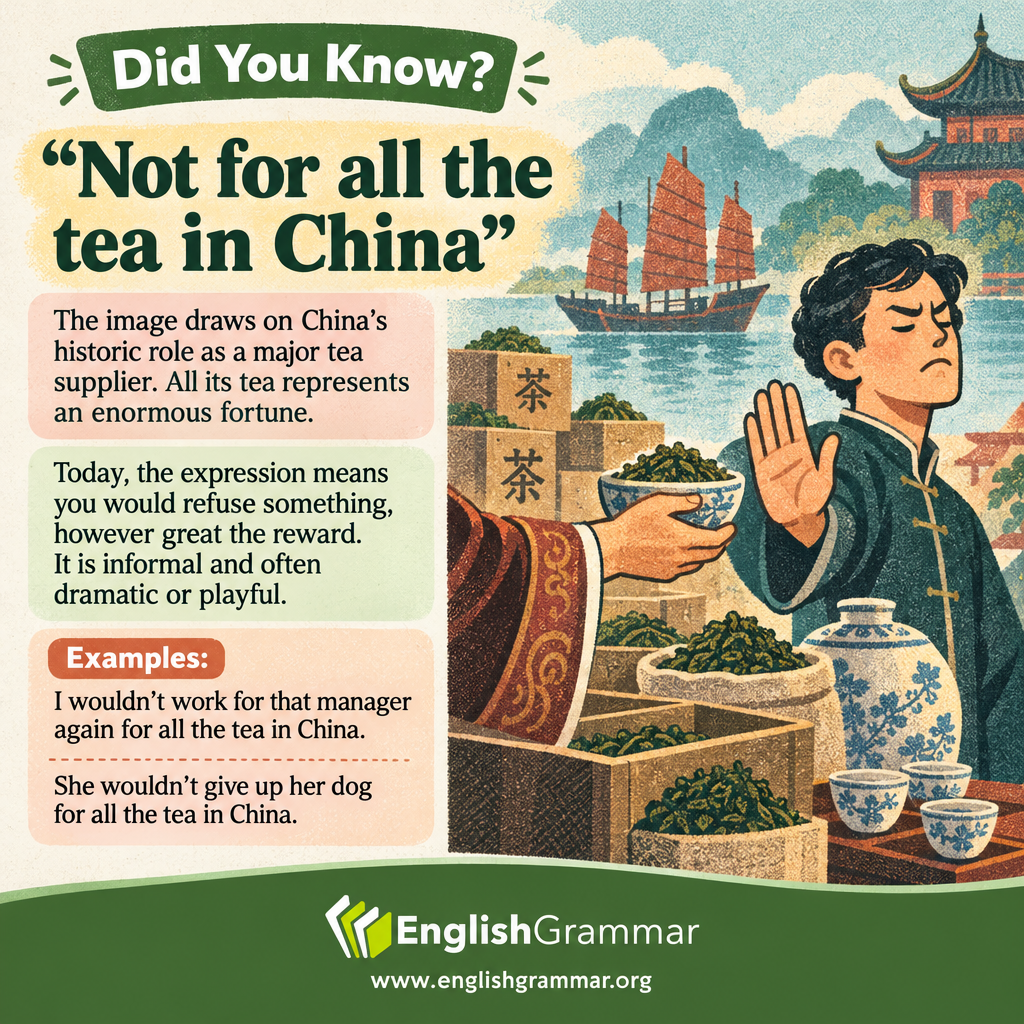
This expression means “I would not do it, no matter how great the reward.” It makes a refusal stronger than a simple “no” and is mainly used in informal conversation.
The image draws on China’s historic importance in the tea trade. China was a major source of tea for Britain, where demand made it a valuable commercial product. Imagining all the tea in such a large tea-producing country suggests an enormous amount of wealth. The speaker’s point is that even this huge reward would not change their mind.
You do not need to know the exact monetary value of the tea to understand the expression. Its force comes from exaggeration: the imagined offer is impossibly generous, but the answer is still no.
Examples:
- “I wouldn’t sell my grandmother’s ring for all the tea in China.” The ring matters more to the speaker than any possible payment.
- “Not for all the tea in China!” This can stand alone as an emphatic answer to a question such as “Would you ever go skydiving?”
The expression can communicate a serious refusal, but it can also sound playful or dramatic. Context and tone make the difference. “I’d rather not” is a softer response; this idiom suggests that persuasion will not work. In formal writing or a delicate conversation, a direct explanation of your refusal may be more suitable.