
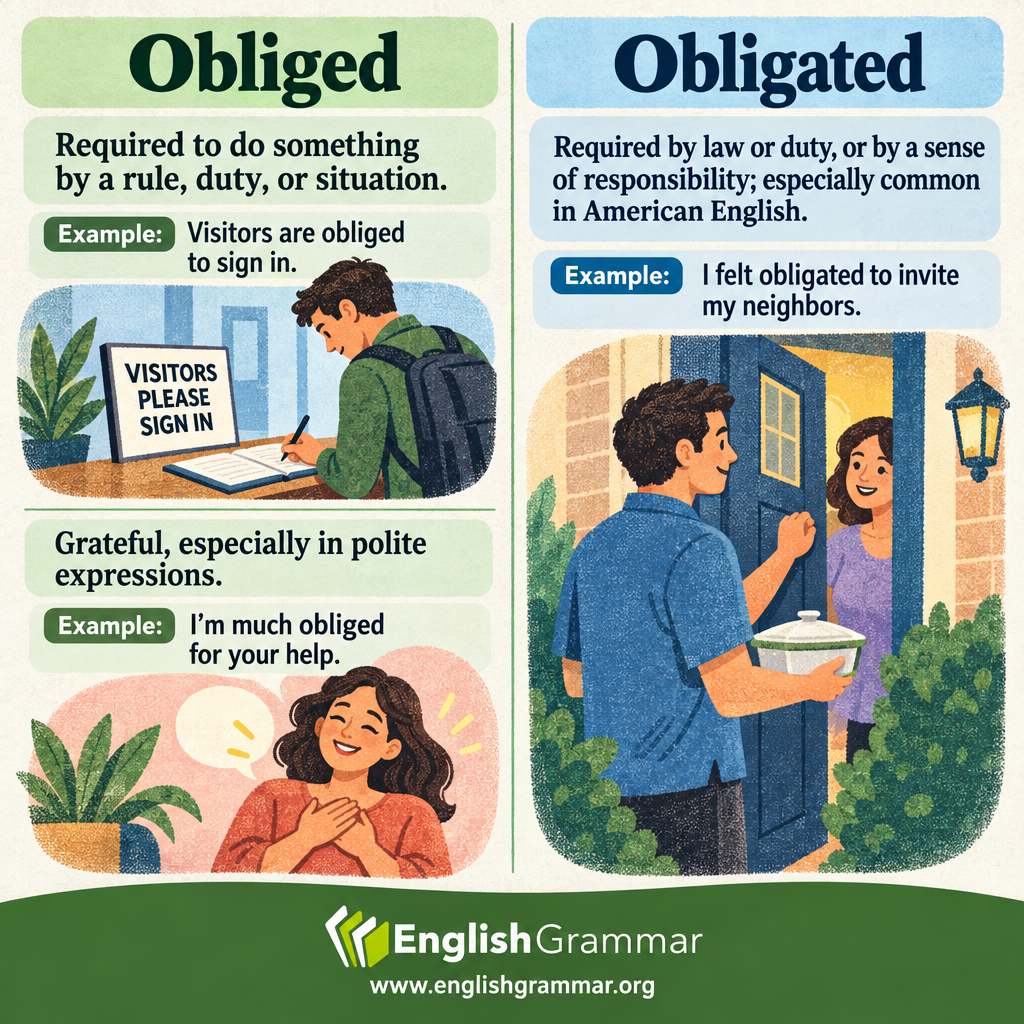
Obliged and obligated often mean that someone must do something because of a rule, duty, or sense of responsibility. Their meanings overlap, so a strict “social duty versus legal duty” rule is misleading.
When you mean required to do something, either word may fit. Both commonly appear in the pattern be or feel + obliged/obligated + to + verb.
- Employees are obliged to follow the safety rules.
- The company is obligated to refund the payment.
These examples do not show an exclusive distinction: you could exchange the two words without changing the basic meaning. Both can also describe personal pressure rather than a legal requirement:
- I felt obliged to stay until the guests left.
- She felt obligated to help her younger brother.
Regional preference matters, but it is not a strict boundary. Obligated is especially common in American English. British English generally favors obliged for this meaning. Neither word belongs exclusively to one region.
Obliged also means grateful, especially in polite expressions such as much obliged. For example: “Thank you for the directions. Much obliged.” This wording can sound formal or old-fashioned, depending on the setting. Obligated is not the usual choice in this expression of thanks.
Notice the surrounding words: obliged to help describes a duty, while much obliged for your help expresses gratitude. The whole phrase, not just the individual word, tells you which meaning is intended.