
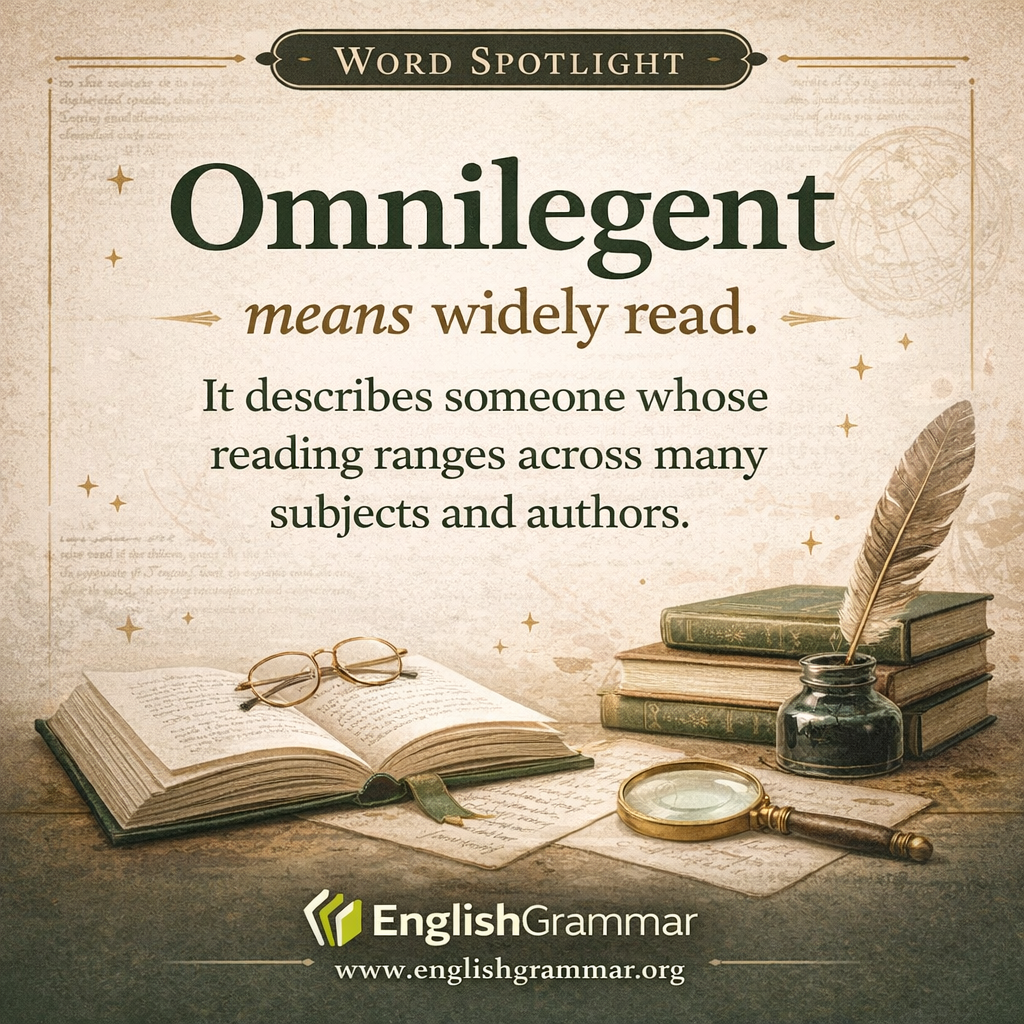
Omnilegent is a rare adjective for someone who is widely read. If a person has read across literature, history, science, philosophy, and more, this word captures that breadth neatly.
The word is built from parts that suggest a broad range of reading. It is not a common everyday term, which is part of its appeal. It sounds precise and literary, so it works best in thoughtful writing, book discussions, or profiles of curious, knowledgeable readers.
You might use it when well read feels a little plain. Omnilegent adds a sense of range, not just quantity. It suggests familiarity with many subjects rather than deep expertise in only one.
- Example: She was an omnilegent editor who could discuss epic poetry, botany, political history, and detective fiction with equal ease.
- Usage tip: Because the word is uncommon, a little context helps readers understand it quickly.
- Best fit: essays, reviews, author bios, and conversations about reading habits.
In short, omnilegent is a stylish, compact choice for describing a person whose reading life is impressively broad.
