
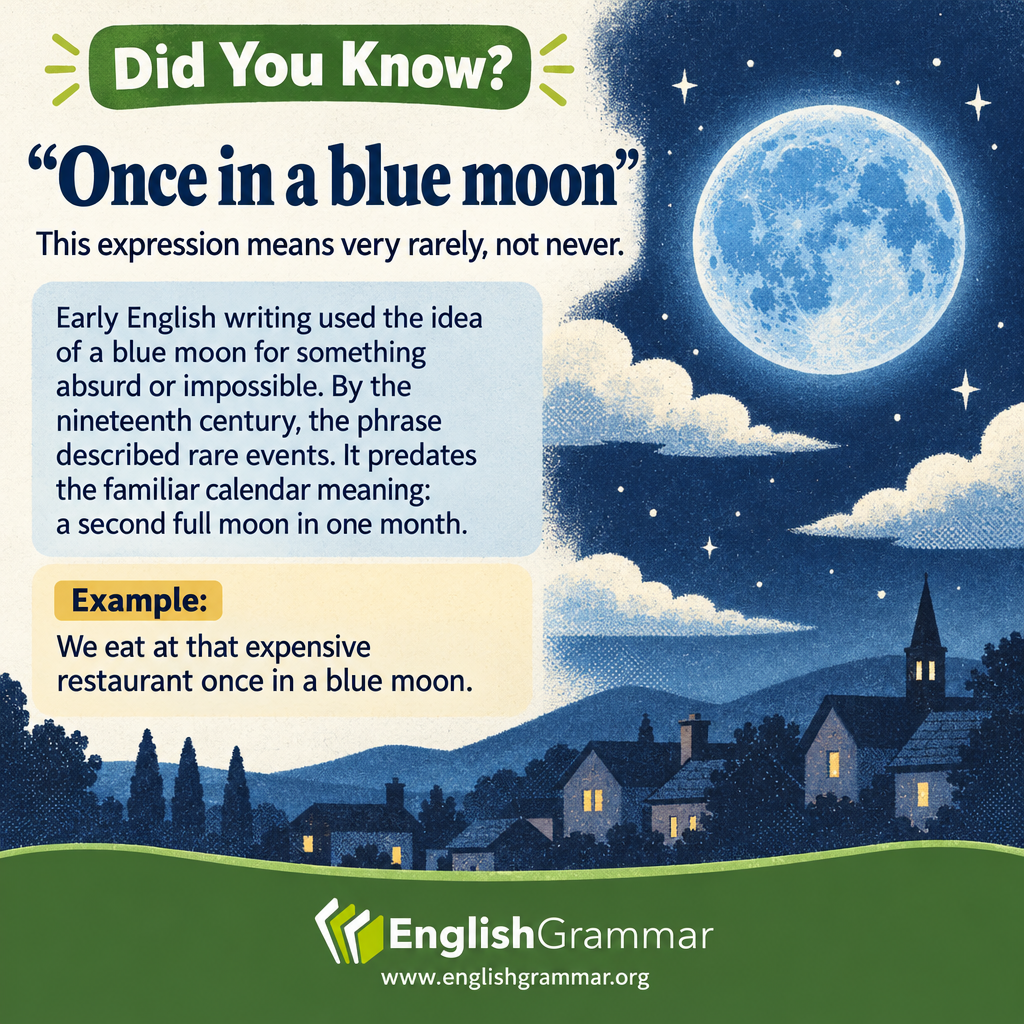
“Once in a blue moon” means very rarely. Use it for something that happens occasionally, but not often. It does not mean that something never happens, and it does not describe an exact schedule.
The expression has a history older than the familiar calendar meaning of a blue moon. In early English writing, the idea of a blue moon represented something absurd or impossible. The moon normally does not look blue, so claiming that it was blue could suggest an obviously false statement.
By the nineteenth century, the expression was being used to describe things that happened rarely. The meaning had moved from the idea of something impossible toward something possible but unusual.
Here are two natural examples:
- “I live far from my cousins, so I see them once in a blue moon.”
- “She usually cooks at home, but once in a blue moon she orders a takeaway.”
In both sentences, the activity happens, just infrequently. For an activity that does not happen at all, never would be more accurate.
Today, a blue moon commonly means the second full moon in a calendar month. Another definition is the third full moon in a season containing four full moons. These calendar uses developed later; they did not give the older expression its meaning. Neither definition requires the moon to look blue.