
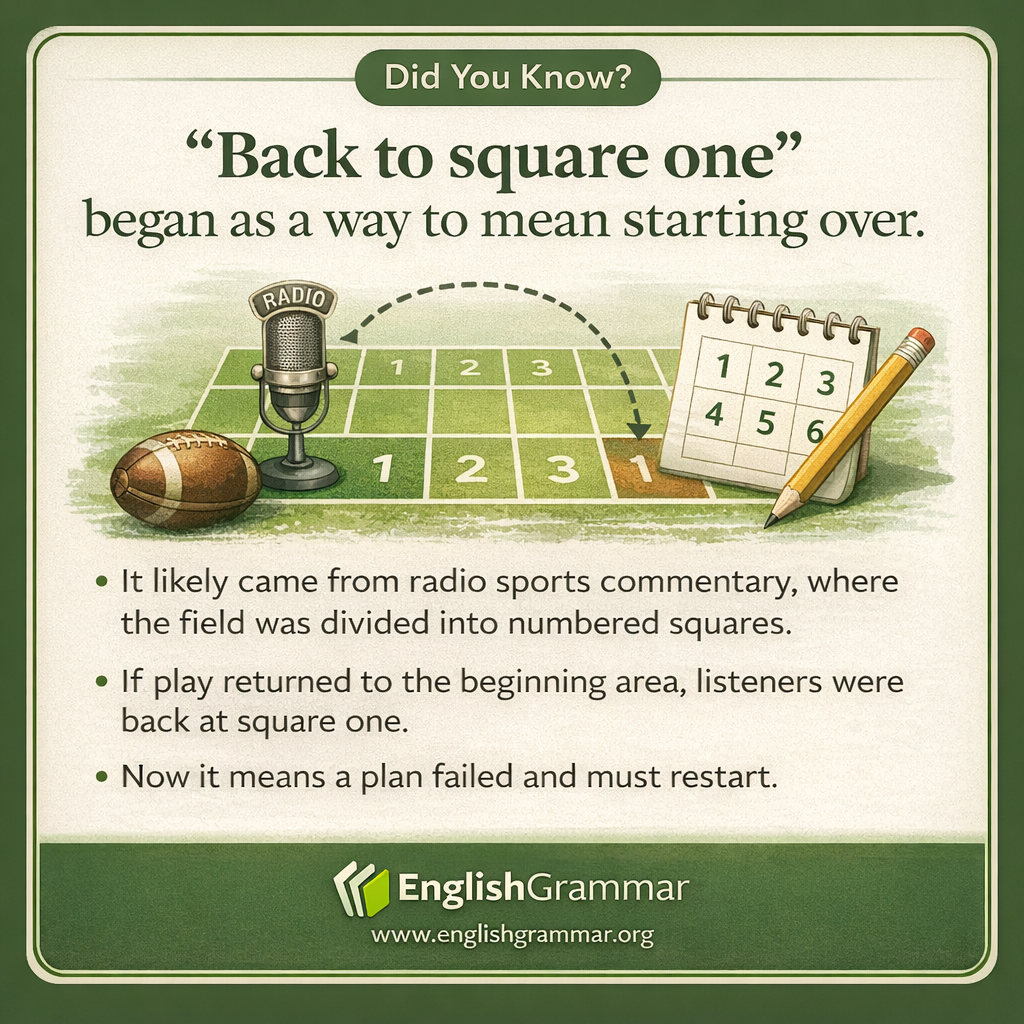
“Back to square one” means returning to the beginning after progress has been lost. People use it when a plan fails, a solution does not work, or a project has to be restarted from the start.
The exact origin is debated, but the most widely accepted explanation connects the phrase to radio sports commentary in the early 20th century. To help listeners follow the action, some broadcasters described the playing field as a set of numbered areas, or squares. If the ball or play moved back to the starting area, listeners were effectively back to square one.
For example, if a team advanced and then lost the ball near its own end, the commentator might describe the action as returning to the first zone. Over time, the wording moved beyond sports and into everyday English.
- A software update breaks the app, so the developers are back to square one.
- A writer rejects a weak draft and starts the article again from the beginning.
Today, the phrase is common because it gives a clear picture: any progress you made has disappeared, and you have to begin again.