
• Skip to primary navigation
  • Skip to main content
  • Skip to primary sidebar
Home of English Grammar
  • Home
  • Course
  • Exercises
  • Grammar Rules
  • Matches
  • Posts
  • Tools
    • Grammar Checker
    • Very Replacer
    • Word Counter
  • Vocabulary Lists
  • Archives
    • Social Media Posts
    • Writing Guides
  • Join free

The origin of “bottoms up”

August 26, 2026

The origin of "bottoms up"

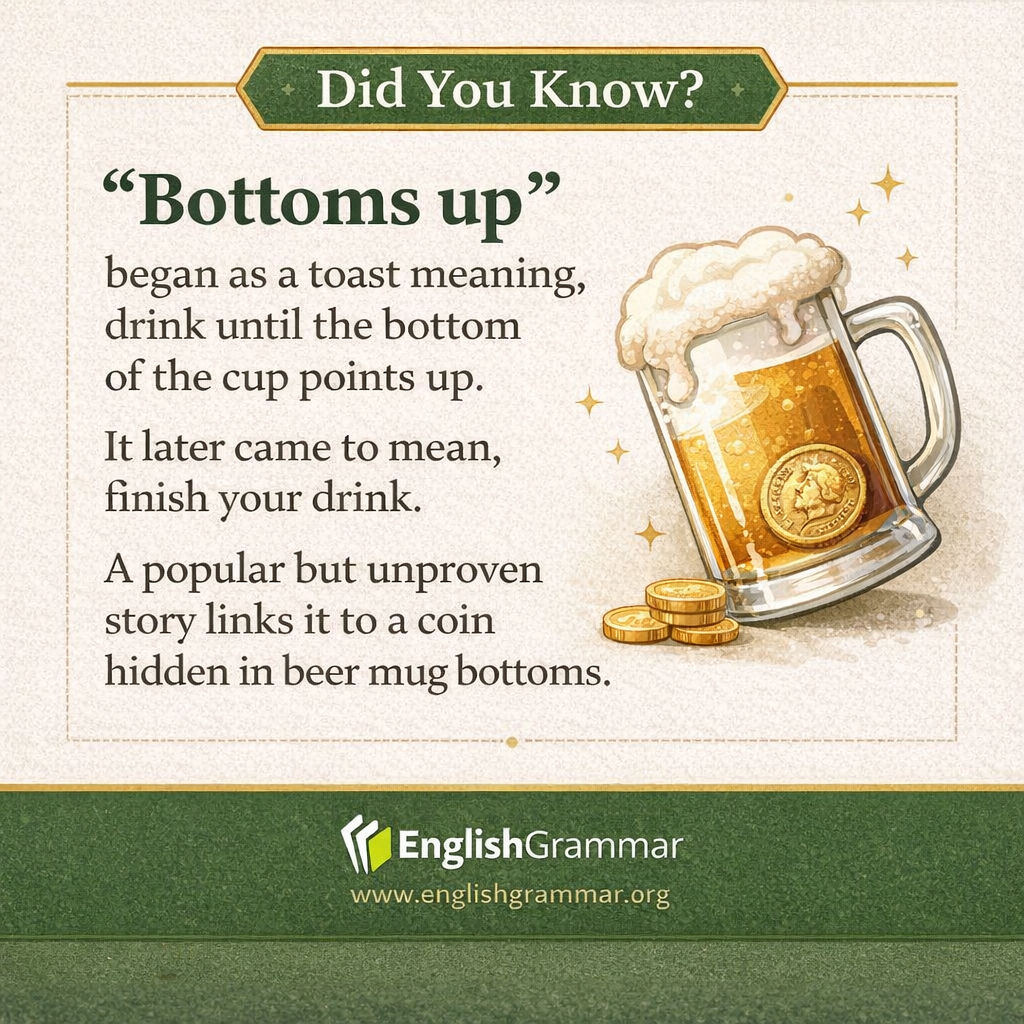
“Bottoms up” is a drinking toast. The most direct explanation is simple: if you empty your cup, the bottom of the cup ends up pointing upward. From that image, the phrase came to mean drink up or finish your drink.

That explanation fits the way English often turns a visible action into an expression. In a toast, someone says it just before everyone drinks. For example, a host might raise a glass and say, Bottoms up, meaning everyone should take a drink right away.

A more dramatic story is often repeated: in some versions, dishonest publicans supposedly hid the King’s shilling in the bottom of a beer mug to force men into military service. Once the drinker found the coin, people warned others to check the mug, leading to the phrase. It is memorable, but historians generally treat it as folklore rather than solidly proven origin.

So the safest explanation is this:

  • Literal image: the cup’s bottom points up when the drink is finished.
  • Common meaning: drink up.
  • Famous legend: the coin in the mug tale is widely told, but not well supported.

In short, the phrase is real and common, but the colorful backstory is much less certain.

Improve your English grammar, vocabulary and writing

We take you step by step from beginner to advanced, even if you struggled with English at school or have always had trouble remembering the rules.

  • 10 modules, 105 lessons and 688 questions
  • Just log in and learn anytime and anywhere
  • Your progress is saved in your account
  • Download the 2026 Grammar Guide (PDF)
Join free

Already have an account? Sign in

See what’s in the course

Primary Sidebar

2.4M761.4K165.8K

Free 2026 Grammar Guide

  • Download Grammar Guide (PDF)
  • Online grammar course, A1 to C2
  • Weekly exercises and vocabulary
  • Join over 3 million English learners

We respect your privacy. Unsubscribe anytime.

Already have an account? Sign in

Grammar Checker - Try Now

Latest Posts

  • What “bibliotherapy” means and how reading can help October 18, 2026
  • 100 Best Synonyms for “Unwanted” October 18, 2026
  • 100 Best Synonyms for “Sassy” October 18, 2026
  • 100 Best Synonyms for “Constantly” October 18, 2026
  • 100 Best Synonyms for “Precedence” October 18, 2026
  • Institutional Announcement Language Exercise October 18, 2026
  • Future Tenses Exercise October 18, 2026
  • 100 Best Synonyms for “Unsatisfied” October 18, 2026
  • 100 Best Synonyms for “Routine” October 18, 2026
  • “Impact” has been a verb for centuries October 18, 2026
Home of English Grammar

Free English grammar exercises, rules and vocabulary lists, with new exercises every week. Join the leading English grammar site with over 3 million followers.

Join free

Learn

  • Exercises
  • Matches
  • Grammar rules
  • Vocabulary lists
  • Writing guides
  • Online tools

More

  • Top social media posts
  • Various posts
  • Contact

Account

  • Join free
  • Grammar Course
  • Free grammar guide (PDF)

Copyright © 2026 EnglishGrammar.org

  • Disclaimer
  • Privacy policy
  • Terms
  • Sitemap