
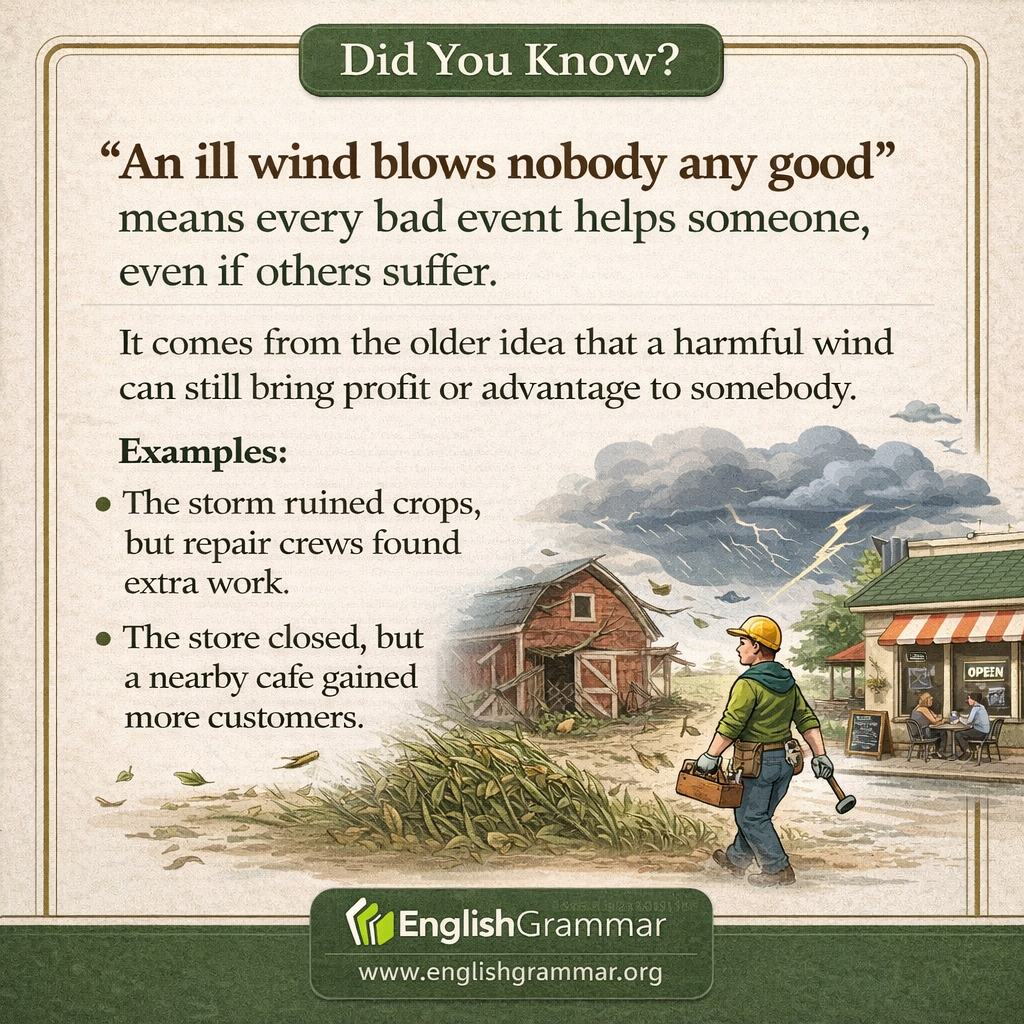
“An ill wind blows nobody any good” is an old proverb. Today, it means that when something bad happens, at least one person often benefits from it, even if others are hurt by it.
The key image is the ill wind, meaning a harmful or unlucky wind. In older English, wind was often used as a symbol of trouble, damage, or changing fortune. The saying suggests that even a destructive force may still bring profit, opportunity, or advantage to somebody.
This idea appears in English from the late medieval period and became well known through later writers. The exact wording varied over time, but the core meaning stayed the same: misfortune is rarely bad for absolutely everyone.
- The storm ruined local crops, but builders and repair crews had more work afterward.
- When one shop closed, a nearby business picked up many of its customers.
People usually use this proverb in a thoughtful or slightly cynical way. It does not celebrate suffering. It simply points out that loss and gain can happen at the same time, depending on who is affected.