
• Skip to primary navigation
  • Skip to main content
  • Skip to primary sidebar
Home of English Grammar
  • Home
  • Course
  • Exercises
  • Grammar Rules
  • Matches
  • Posts
  • Tools
    • Grammar Checker
    • Very Replacer
    • Word Counter
  • Vocabulary Lists
  • Archives
    • Social Media Posts
    • Writing Guides
  • Join free

The origin of “keep at bay”

August 29, 2026

The origin of "keep at bay"

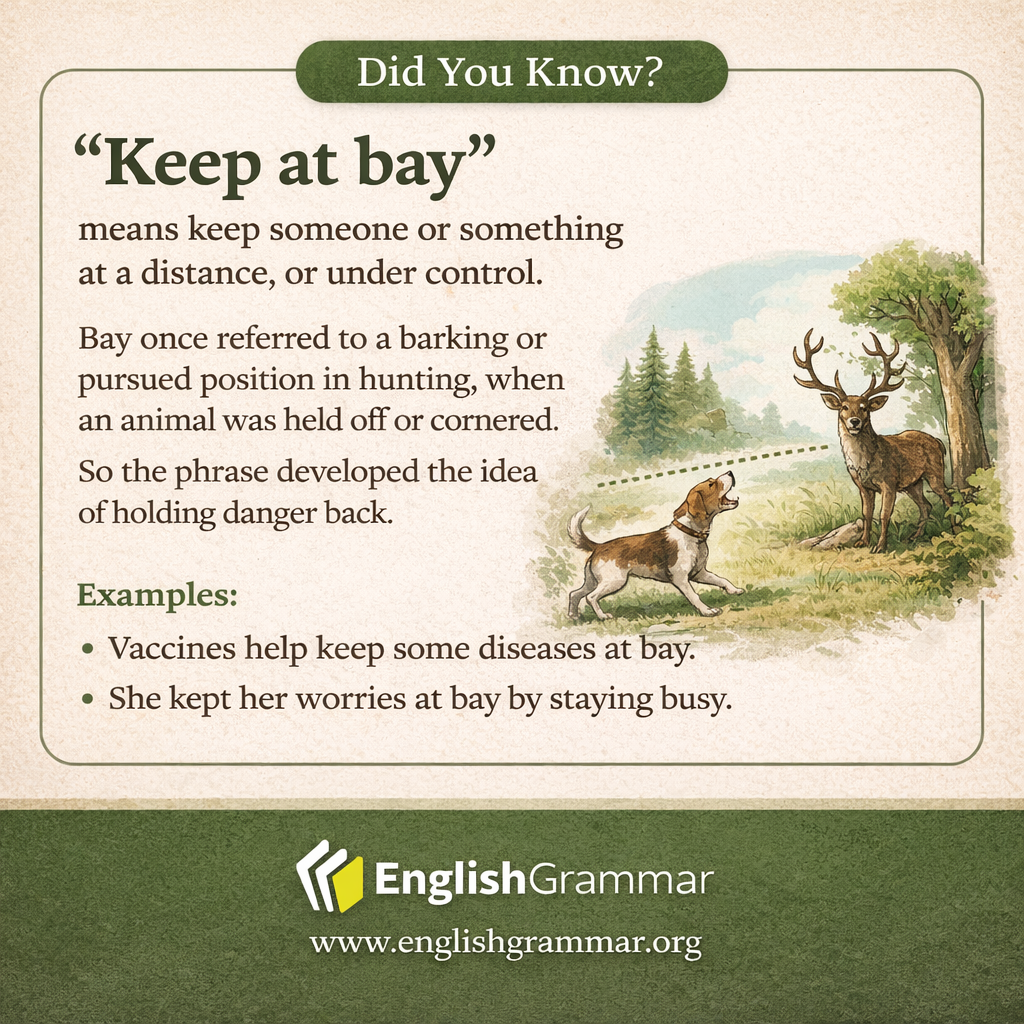
Keep at bay means to hold someone or something back, keep it at a distance, or stop it from causing harm for a time.

The phrase comes from old hunting language. Bay referred to the deep barking of hounds, and also to the moment when an animal being hunted was forced to turn and face the dogs. In that situation, the animal was not free, but it was still resisting and keeping the threat back. That image helped create the modern meaning of holding danger off.

Today, people use the phrase for many kinds of pressure or trouble, not only physical danger. It often suggests control rather than complete victory.

  • Warm clothing can keep the cold at bay.
  • He drank coffee to keep sleep at bay.
  • The new policy is meant to keep costs at bay.

A useful contrast is this: if you avoid something, you stay away from it. If you keep it at bay, it is still near, but you stop it from taking over.

Improve your English grammar, vocabulary and writing

We take you step by step from beginner to advanced, even if you struggled with English at school or have always had trouble remembering the rules.

  • 10 modules, 105 lessons and 688 questions
  • Just log in and learn anytime and anywhere
  • Your progress is saved in your account
  • Download the 2026 Grammar Guide (PDF)
Join free

Already have an account? Sign in

See what’s in the course

Primary Sidebar

2.4M761.4K165.8K

Free 2026 Grammar Guide

  • Download Grammar Guide (PDF)
  • Online grammar course, A1 to C2
  • Weekly exercises and vocabulary
  • Join over 3 million English learners

We respect your privacy. Unsubscribe anytime.

Already have an account? Sign in

Grammar Checker - Try Now

Latest Posts

  • What “bibliotherapy” means and how reading can help October 18, 2026
  • 100 Best Synonyms for “Unwanted” October 18, 2026
  • 100 Best Synonyms for “Sassy” October 18, 2026
  • 100 Best Synonyms for “Constantly” October 18, 2026
  • 100 Best Synonyms for “Precedence” October 18, 2026
  • Institutional Announcement Language Exercise October 18, 2026
  • Future Tenses Exercise October 18, 2026
  • 100 Best Synonyms for “Unsatisfied” October 18, 2026
  • 100 Best Synonyms for “Routine” October 18, 2026
  • “Impact” has been a verb for centuries October 18, 2026
Home of English Grammar

Free English grammar exercises, rules and vocabulary lists, with new exercises every week. Join the leading English grammar site with over 3 million followers.

Join free

Learn

  • Exercises
  • Matches
  • Grammar rules
  • Vocabulary lists
  • Writing guides
  • Online tools

More

  • Top social media posts
  • Various posts
  • Contact

Account

  • Join free
  • Grammar Course
  • Free grammar guide (PDF)

Copyright © 2026 EnglishGrammar.org

  • Disclaimer
  • Privacy policy
  • Terms
  • Sitemap