
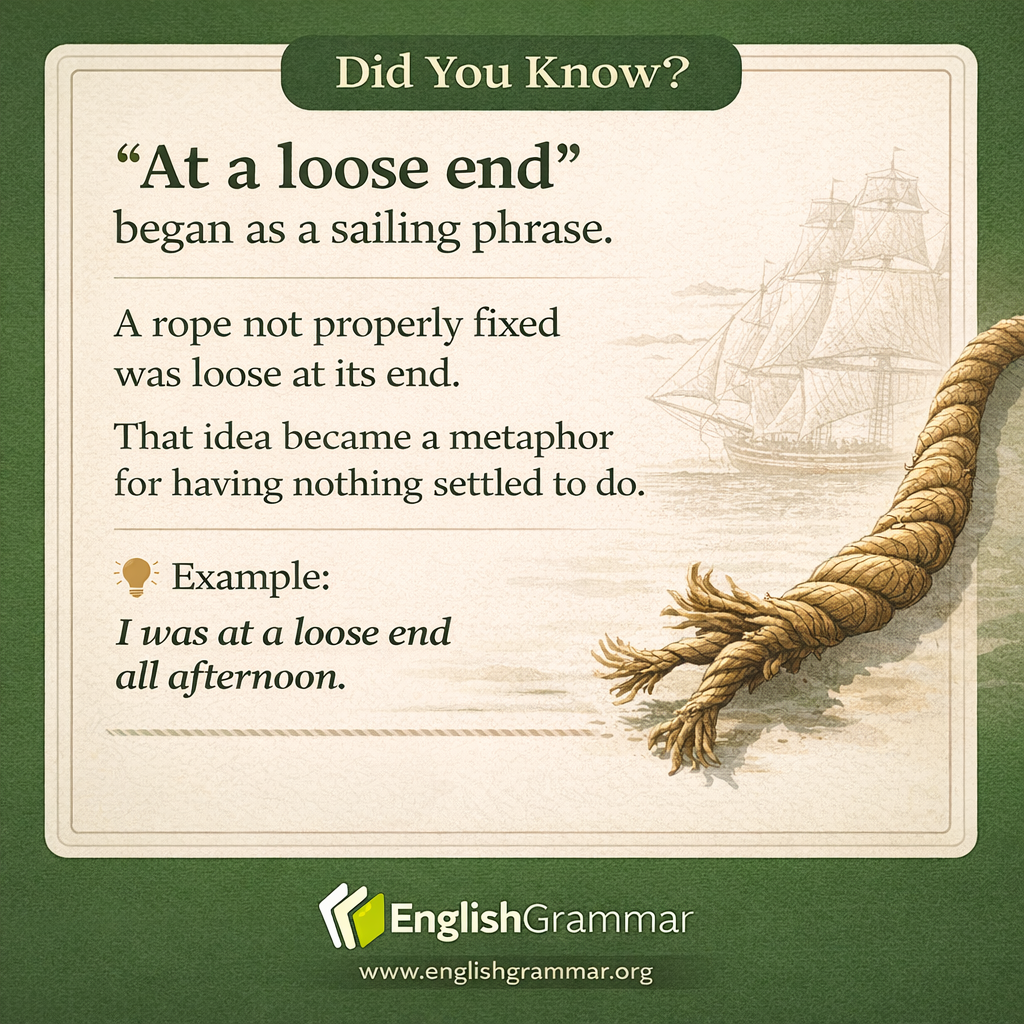
At a loose end is an old expression with roots in sailing. In its earliest sense, a loose end was the end of a rope that was not properly secured. On a ship, that mattered because ropes needed to be tied, coiled, or fastened correctly.
Over time, the image became figurative. If something was left loose or unsettled, it suggested a lack of order or purpose. That is how the phrase came to describe a person who has no clear task, plan, or engagement for the moment.
Today, the idiom usually means temporarily idle or unsure what to do next. For example, you might say, I was at a loose end after my meetings were canceled. The speaker is not literally talking about rope. They mean they suddenly had free time and no fixed activity.
- Original sense: the unsecured end of a rope
- Later figurative sense: a person without a settled task
- Modern use: having nothing particular to do for a while
This is a good example of how everyday English often preserves vivid images from older working life, especially from travel, trade, and the sea.