Home of English Grammar

Grammar Guide
  • Home
  • Exercises
  • Matches
  • Rules
  • Tools
    • Grammar Checker
    • Very Replacer
    • Word Counter
  • Top Social Media Posts
  • Various Posts
  • Vocabulary
  • Writing Guides
  • Contact

The origin of “rest on your laurels”

May 11, 2026 - pdf

The origin of "rest on your laurels"

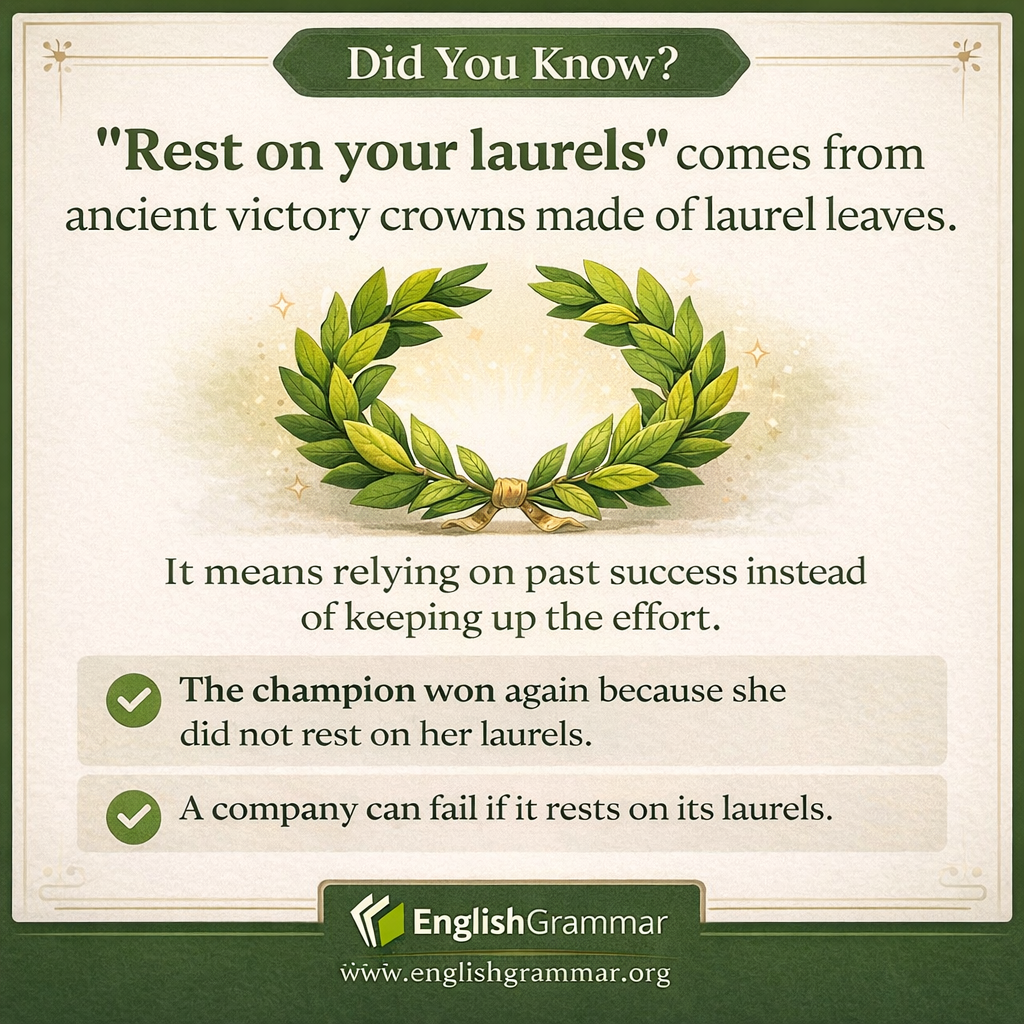
The phrase “rest on your laurels” comes from the ancient custom of honoring victors with laurel wreaths, crowns made from laurel leaves. In Greece and Rome, poets, athletes, and military leaders could receive laurel as a symbol of achievement and public honor.

Over time, laurels came to mean a person’s past successes. So if someone rests on their laurels, they rely too much on what they have already achieved instead of continuing to work, improve, or compete.

The phrase is usually a warning, not praise. It suggests that past success is not enough by itself.

  • Person: A student gets top grades one year, then studies less and falls behind.
  • Sports: A champion keeps training because they do not want to rest on their laurels.
  • Business: A successful company can lose customers if it stops innovating.

So the image behind the idiom is literal at first, a winner with a laurel crown, but the modern meaning is figurative: do not let yesterday’s success replace today’s effort.

  • Share
  • Post
  • Post
  • Email
NEW: Try Matches, our daily vocabulary challenge. Pick a topic and level and match words with definitions to boost your vocabulary.
2,485,429 
761,532 
Improve Your Grammar
  • Download 2026 Grammar Guide (PDF)
  • Free Weekly Exercises & Vocabulary
  • Join over 3 Million English Learners
We respect your privacy. Unsubscribe anytime.

Grammar Checker

GrammarCheck.net - Try online
Hint → Bookmark GrammarCheck for future use.

Latest Posts

  • The origin of “rest on your laurels” May 11, 2026
  • Good grammar, good style: why they are not the same May 11, 2026
  • 100 Other Words for “Natural” May 11, 2026
  • 100 Questions to Ask At a Parent-Teacher Conference May 11, 2026
  • What “never say die” means and where it came from May 11, 2026
  • 100 Words to Describe a Busy Day May 11, 2026
  • Why “bungalow” comes from Bengal May 11, 2026

Copyright © 2026 · EnglishGrammar.org
Disclaimer · Privacy Policy · Sitemap · Terms

Improve Your Grammar
  • Download 2026 Grammar Guide (PDF)
  • Free Weekly Exercises & Vocabulary
  • Join over 3 Million English Learners
We respect your privacy. Unsubscribe anytime.