
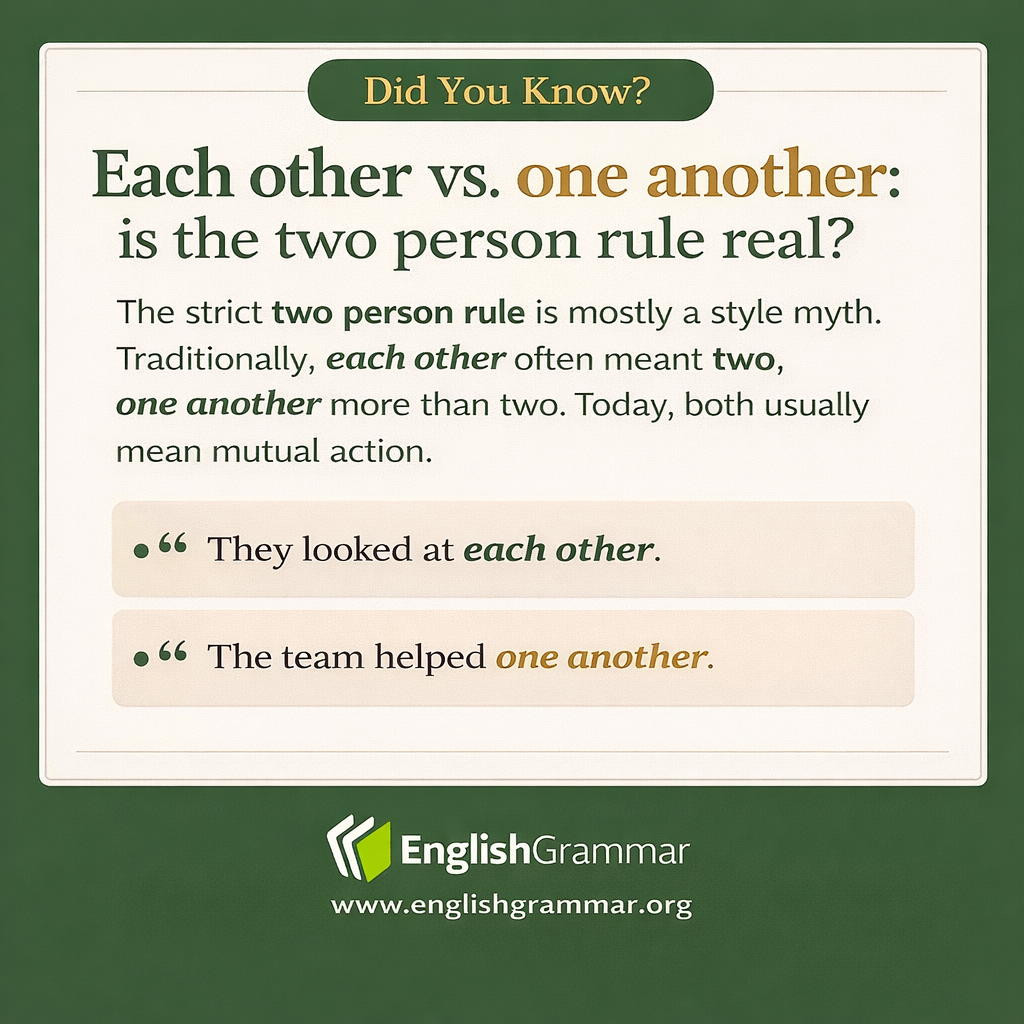
Many people learn a neat rule: use each other for two people and one another for more than two. That distinction did appear in traditional grammar advice, but in modern English it is usually not a strict rule.
In most everyday writing and speech, the two expressions are interchangeable. Both refer to a mutual or reciprocal action.
- Two people: Sarah and Leo texted each other.
- More than two: The players encouraged one another.
- Also common: The players encouraged each other.
That last example is important. Even with a group, many native speakers naturally choose each other. Likewise, one another can appear with just two people, especially in formal or literary styles.
If you want to follow a traditional style guide, you can keep the old distinction. If your goal is natural modern English, either phrase is usually fine. The best choice is often the one that sounds clearest and most natural in the sentence.