
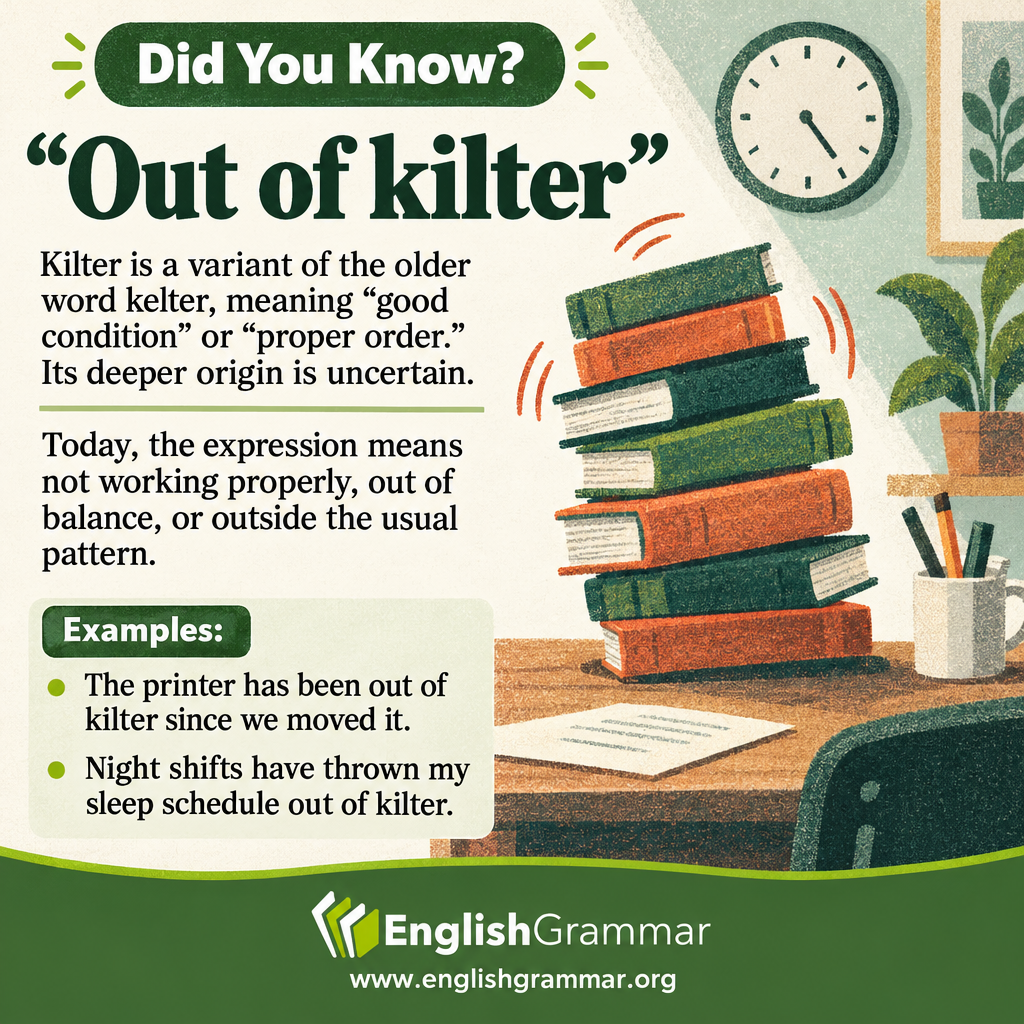
If something is out of kilter, it is not working properly, is out of balance, or is no longer following its usual pattern. The expression can describe a machine, a daily routine, or the relationship between things that normally work well together.
The history is partly clear. Kilter is a variant of the older word kelter, meaning “good condition” or “proper order.” Both forms have been used since the seventeenth century. However, the deeper origin of the word is uncertain. There is no need to imagine a particular broken machine to understand the phrase: its link to condition and order explains the meaning.
Today, the expression is useful in several everyday situations:
- Equipment: “The printer has been out of kilter since we moved it.” This means it has not been working properly.
- Routines: “Night shifts have thrown my sleep schedule out of kilter.” The person’s usual sleeping pattern has been disrupted.
- Balance: “Our spending is out of kilter with our income.” Spending does not fit what the household earns.
You will often hear be out of kilter to describe a state and throw something out of kilter to describe what causes the problem. The phrase does not necessarily mean something is completely broken; it may simply need adjustment.