
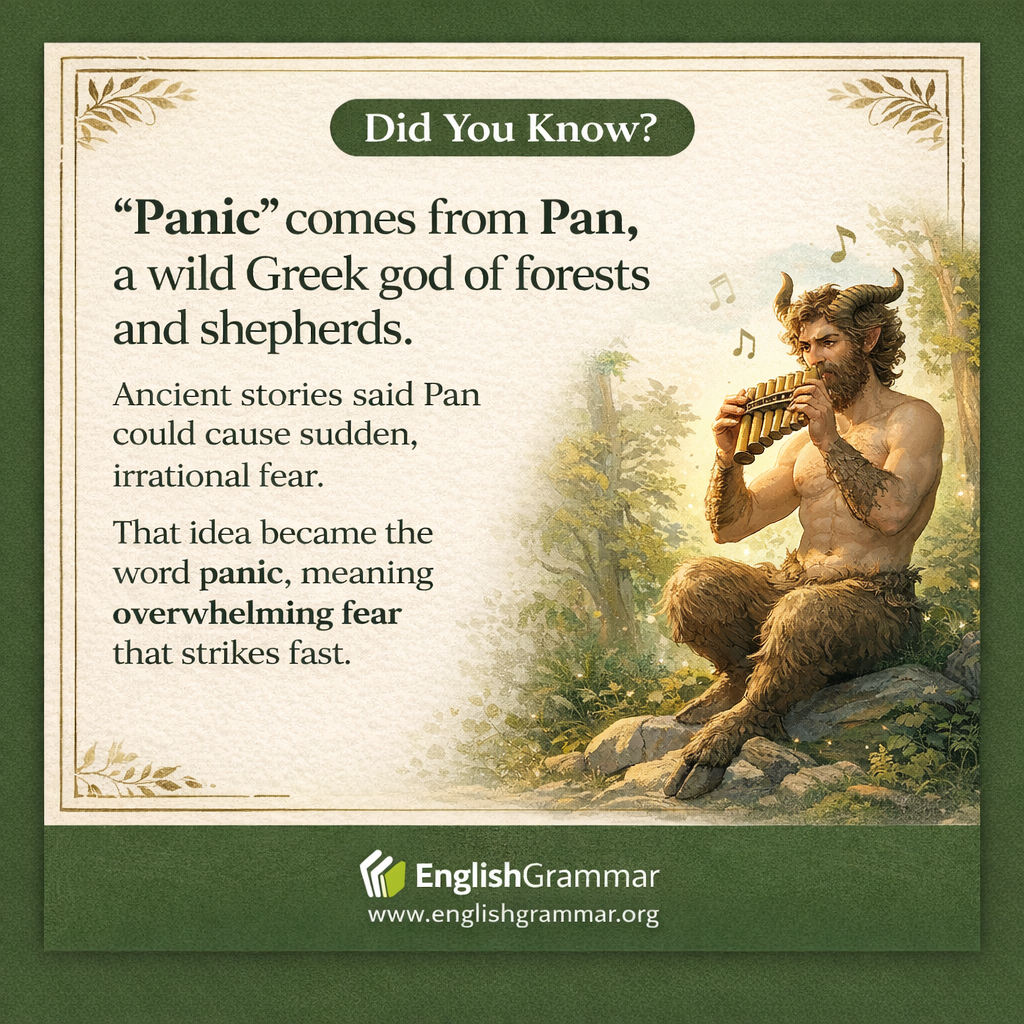
Panic is linked to Pan, a god from ancient Greek mythology. Pan was associated with wild places, shepherds, flocks, and the countryside. In old stories, he could inspire sudden, intense fear, especially in lonely or remote places.
That connection shaped the history of the word panic. The idea was not just ordinary fear. It was fear that arrived quickly and felt overwhelming or irrational.
That older sense still matches how we use the word today. For example, if someone suddenly feels unable to think clearly during an emergency, we might say they are in a panic. The word suggests a fast, overpowering reaction.
- Fear: a general feeling of being afraid.
- Panic: sudden, intense fear that can disrupt clear thinking.
- Pan: the mythological source behind the word.
So when English speakers use panic, they are using a word with roots in mythology. The modern meaning has become broader, but the central idea remains the same: fear that strikes suddenly and powerfully.