
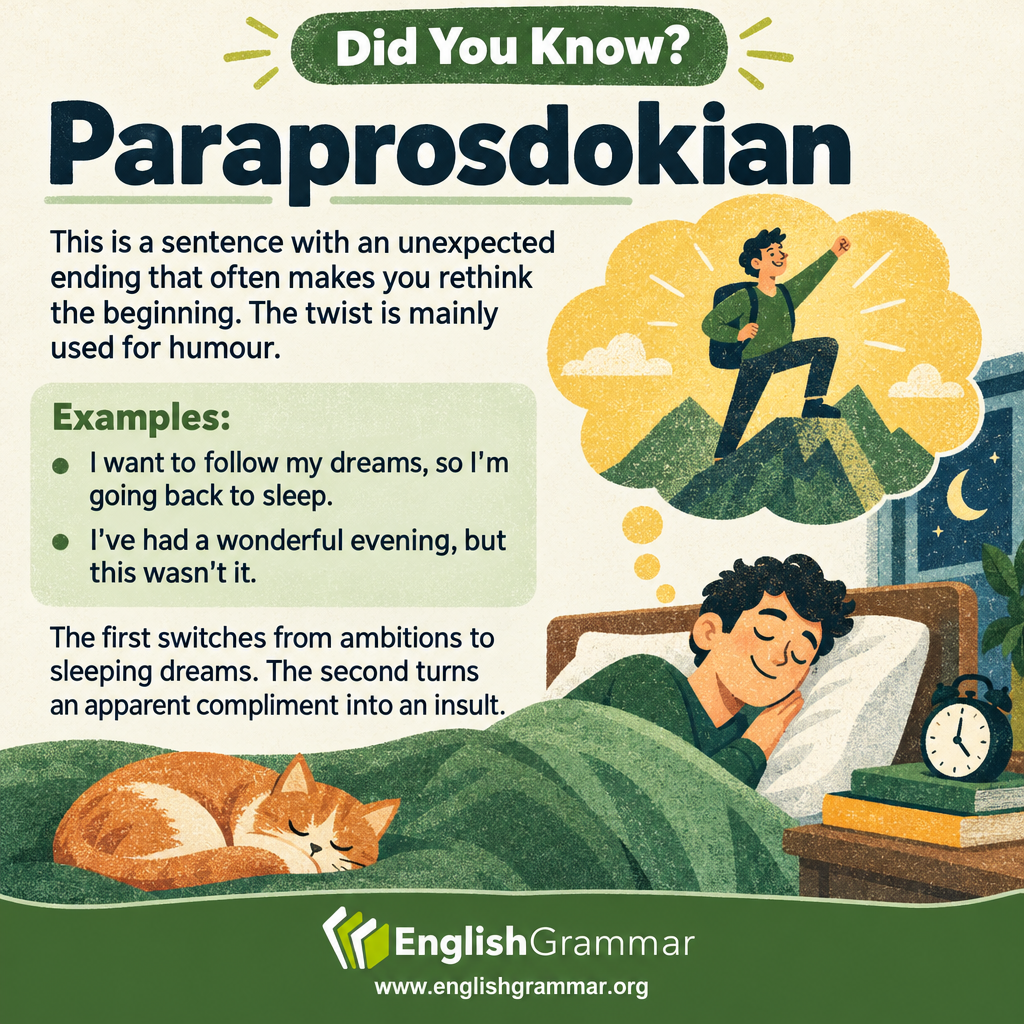
A sentence can lead you towards one meaning, then suddenly take you somewhere else. This kind of verbal twist is called a paraprosdokian. Its ending is unexpected and often makes you reinterpret what came before. It is mainly used for humour.
The important feature is not simply that something surprising happens. The surprise comes from how the ending changes your understanding of the sentence. You may briefly need to go back and read the beginning differently.
Consider these examples:
- I want to follow my dreams, so I’m going back to sleep.The opening suggests pursuing goals or ambitions. The ending switches to dreams experienced during sleep. That change gives the familiar expression a different meaning.
- I’ve had a wonderful evening, but this wasn’t it.At first, this sounds like a compliment about the current evening. The final words reveal that the speaker means some other evening. What seemed polite becomes an insult.
Both examples depend on expectation. You recognise a familiar idea or social pattern, predict where the sentence is going, and then discover that your prediction was wrong.
To try writing one, begin with a phrase that encourages an obvious interpretation. Then add a short ending that redirects it. A useful check is whether readers can understand both the first impression and the twist without needing a long explanation.