
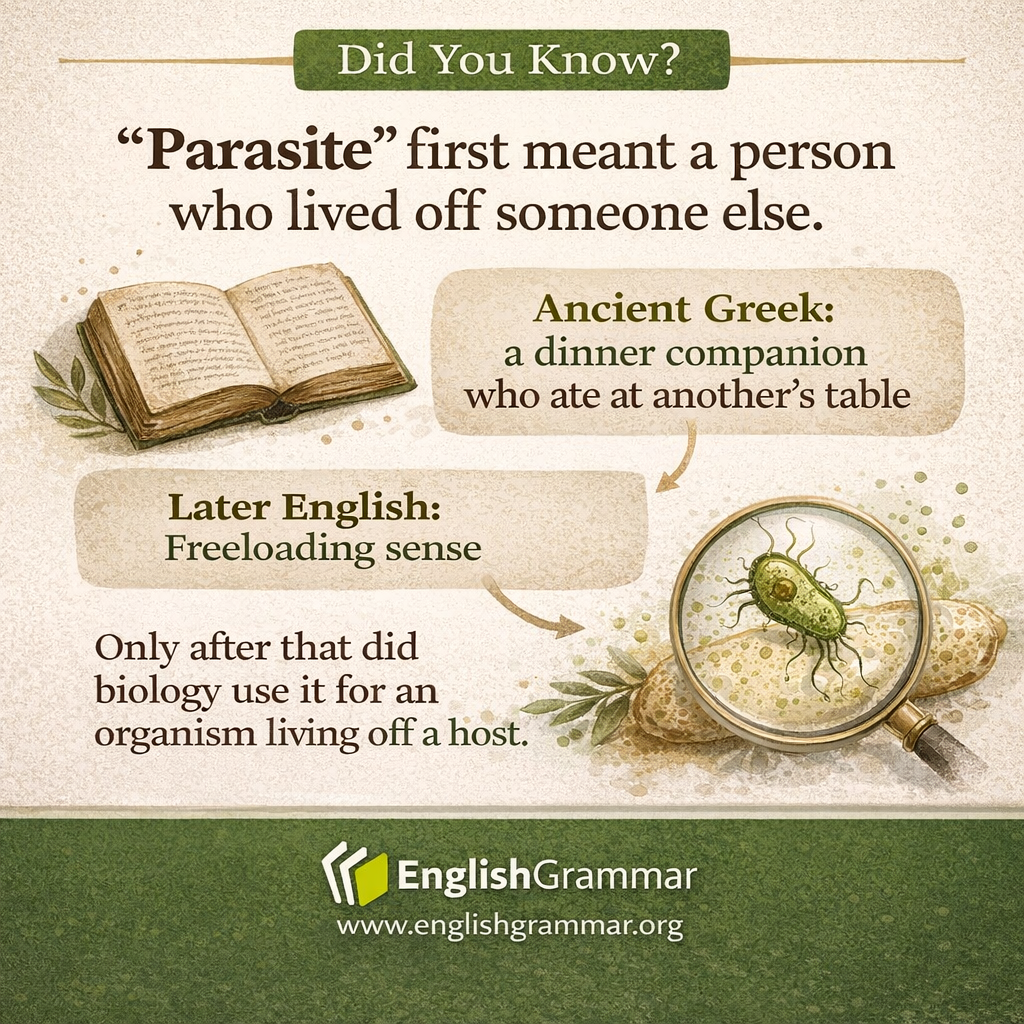
Parasite did not begin as a biology word. It came into English from Greek and Latin with a human meaning: a person who lives at someone else’s expense.
In ancient Greek, the original parasitos referred to someone who ate beside another person, especially at another person’s table. Over time, the idea became more negative. Instead of simply being a dinner companion, a parasite came to mean a flatterer or freeloader who benefits from others without giving much back.
English used the human sense first. Later, science extended the word to living things that depend on a host for food or support. That is the biological meaning most people know today.
- Older human sense: “He was called a parasite for living off rich friends.”
- Biology sense: “A tapeworm is a parasite that lives in a host.”
The connection between the two meanings is the same basic idea: one side benefits while the other carries the cost. That is why the older social meaning helped shape the later scientific one.