
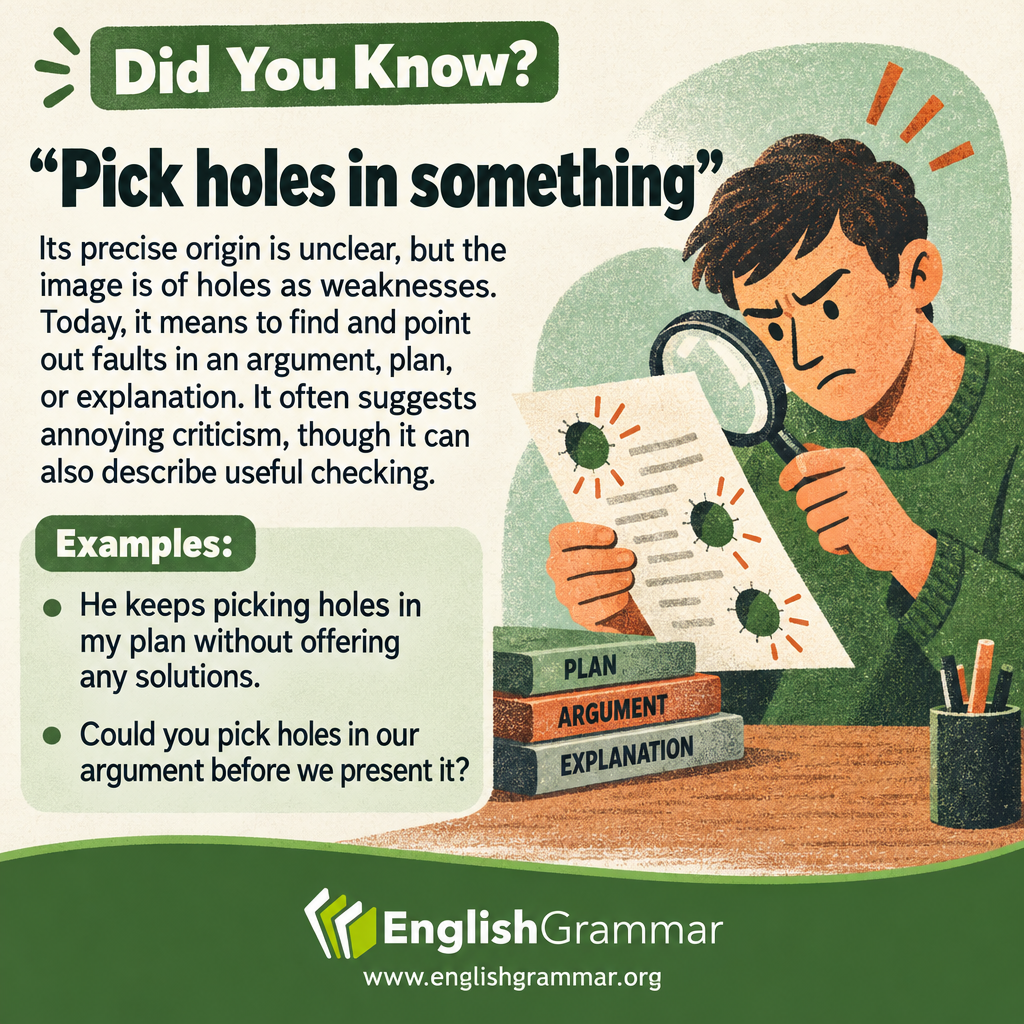
This expression means to find and point out faults or weaknesses in something, especially an argument, explanation, or plan. The weaknesses might be missing information, mistakes, or details that do not fit together.
What about its origin? Its precise historical origin is unclear, so it is best not to attach it to a particular trade or story. The imagery is easier to explain: holes represent weaknesses. An argument with “holes” in it is less convincing, just as something full of holes may be less strong or effective.
How is it used today? The expression often suggests criticism that feels annoying or unhelpful. However, it can also describe useful testing of an idea before someone relies on it. The surrounding words help show the speaker’s attitude.
- “He keeps picking holes in my plan but never suggests any improvements.” Here, the speaker is frustrated by repeated criticism.
- “Before we present our proposal, could you try to pick holes in it?” Here, the speaker welcomes criticism because finding weaknesses early could prevent problems later.
You can use it with words such as plan, argument, explanation, and proposal. Keep in before the thing being criticised: “She picked holes in his explanation,” not “She picked holes at his explanation.”