
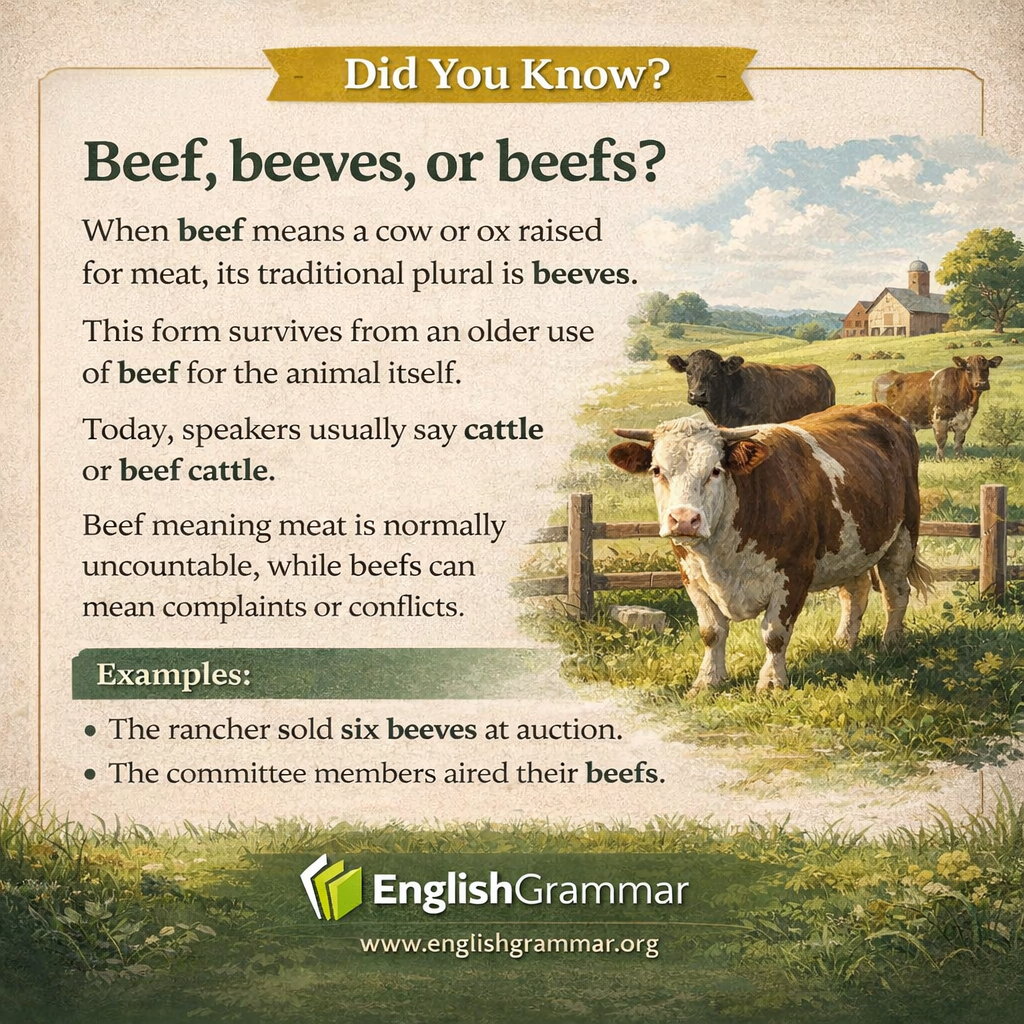
Beeves is a genuine plural of beef, but it belongs to a meaning that is uncommon in modern everyday English. In older usage, a beef could be a cow, ox, or steer, especially one raised or prepared for meat. More than one such animal could therefore be called beeves.
The form survives from the older animal sense of the word. Today, farmers, sellers, and writers are much more likely to use cattle, beef cattle, or a phrase such as six head of cattle. As a result, beeves may sound historical, literary, or specialized, even though dictionaries still record it.
Modern beef usually names the meat. In that sense it is a mass noun, so it normally has no plural: We bought some beef, not We bought three beeves. If someone is counting cuts, servings, or kinds, the countable noun names those items instead.
Beef also has an informal meaning: a complaint, grievance, or conflict. The ordinary plural for that sense is beefs, not beeves.
- A rancher might write, Eight beeves were sent to market.
- The neighbors finally resolved their beefs. uses the informal conflict sense.
- We served beef with vegetables. treats the meat as uncountable.
The right form depends on meaning. Use beeves for animals in the rare traditional sense, beefs for multiple grievances, and usually no plural for meat.