
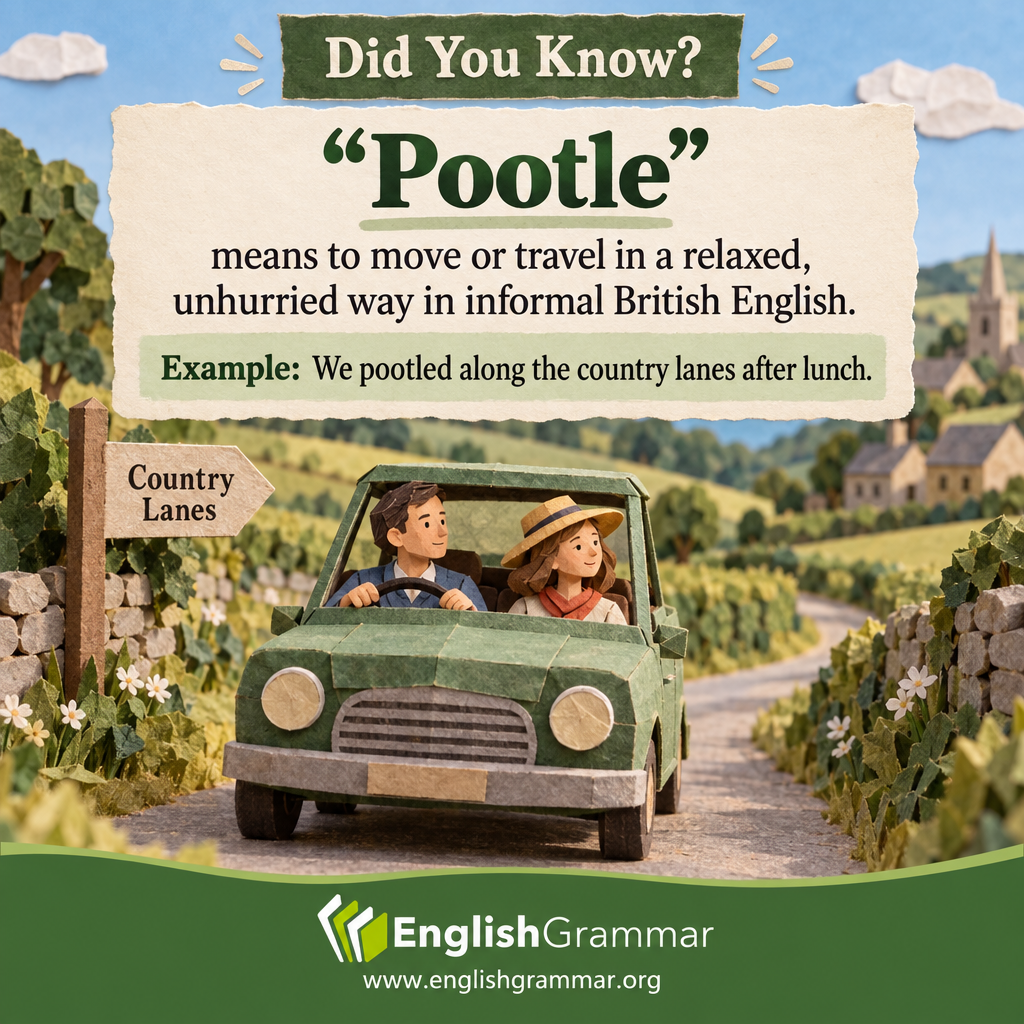
Pootle is an informal verb used mainly in British English. It means to move or travel at a relaxed, unhurried pace. The word often makes a trip sound casual and pleasant rather than planned around speed.
You can use it for walking, driving, cycling, boating, or simply moving from place to place. It commonly appears with words such as along, around, and off, which show the direction or general shape of the movement.
- We pootled around the market before catching the train.
- They pootled off in their old car after breakfast.
- The boat pootled down the river all afternoon.
Compare it with verbs that suggest speed. “We raced to the station” tells us that the journey was urgent and fast. “We pootled to the station” suggests that the travellers took their time. Because of that relaxed meaning, the second sentence might sound unusual if they were late.
The verb follows regular spelling patterns: pootle, pootles, pootled, and pootling. It usually needs no direct object: “I pootled home.” A route can follow a preposition: “I pootled through the village.”
In formal writing, a neutral verb such as travel, drive, walk, or move may fit better. In informal conversation or storytelling, however, pootle adds a light, easygoing tone.