
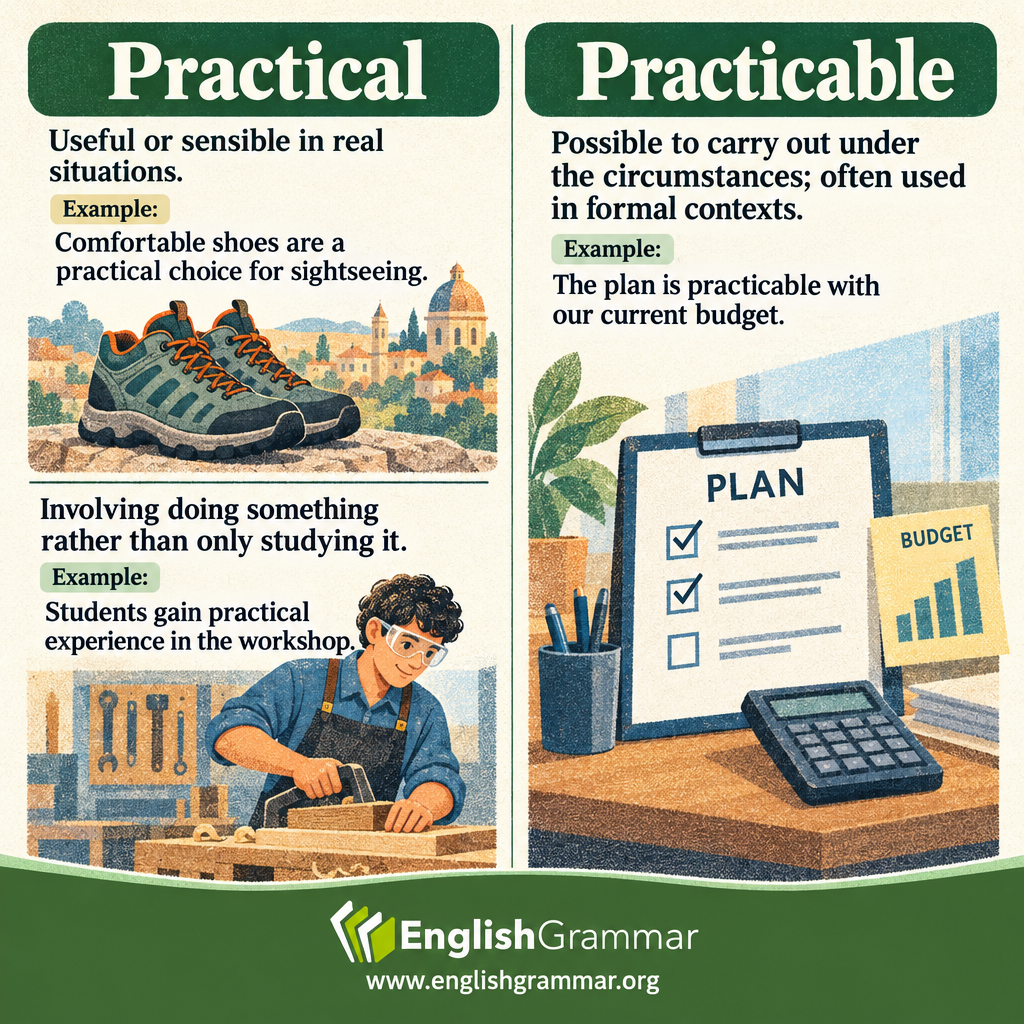
Practical and practicable can both describe plans and solutions, but they usually emphasize different things. The key question is whether you mean useful in everyday life or possible to carry out.
Practical commonly means useful, sensible, or suited to real situations. Choose it when discussing something that helps people solve a problem or meet an everyday need.
- Her advice was practical and easy to follow.
- A backpack is a practical choice for the walk to school.
It can also describe learning or experience gained by doing something, rather than only studying ideas or rules.
- The course includes practical training in bicycle repair.
Practicable means possible to do or carry out under the circumstances. It often appears in formal discussions of plans, methods, and arrangements. Time, money, equipment, or other conditions may determine whether something is practicable.
- Finishing the repairs today is practicable if all the parts arrive.
Compare these descriptions of the same proposal:
- The proposal is practical because it would make deliveries simpler.
- The proposal is practicable because we already have the staff and vehicles.
The meanings overlap: a practical solution is often also possible to implement. Still, practicable focuses more specifically on feasibility. A plan might be possible to carry out without being a sensible choice. For everyday usefulness or hands-on learning, practical is usually the better fit.