
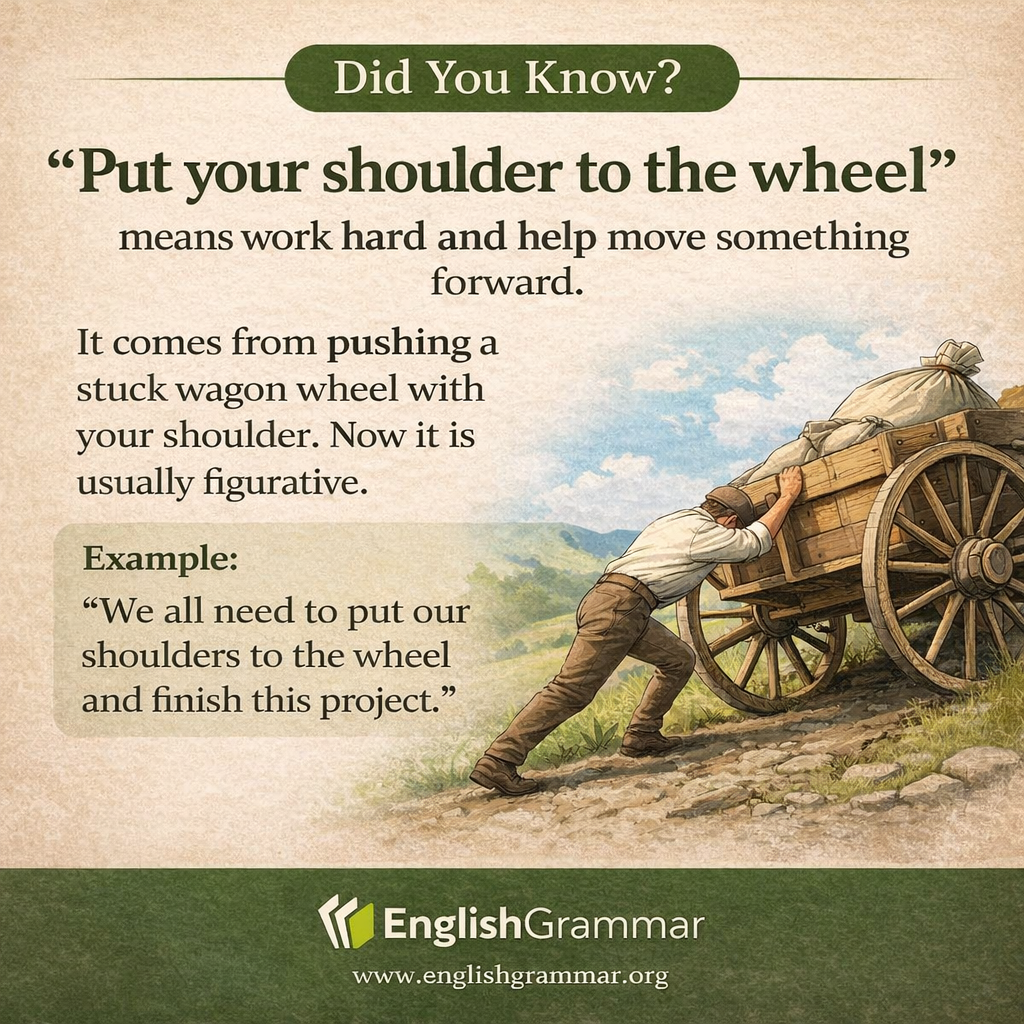
Put your shoulder to the wheel began as a very physical image. If a wagon or cart got stuck, a person might press their shoulder against the wheel and push with force. From that literal action, English developed a figurative meaning: work hard and help move a task forward.
Today, people usually use the expression figuratively, not for actual wheels. It often suggests practical effort, teamwork, and determination. For example, someone might say, We need to put our shoulders to the wheel and finish the report. In that sentence, no wheel is involved. The idea is simply that everyone needs to work hard.
A useful contrast is this:
- Literal: He put his shoulder to the wheel to free the cart.
- Figurative: The whole team put their shoulders to the wheel to solve the problem.
You may also see both shoulder and shoulders. The meaning stays the same. In modern use, the phrase is a vivid reminder of effort that helps something stuck begin moving again.
