
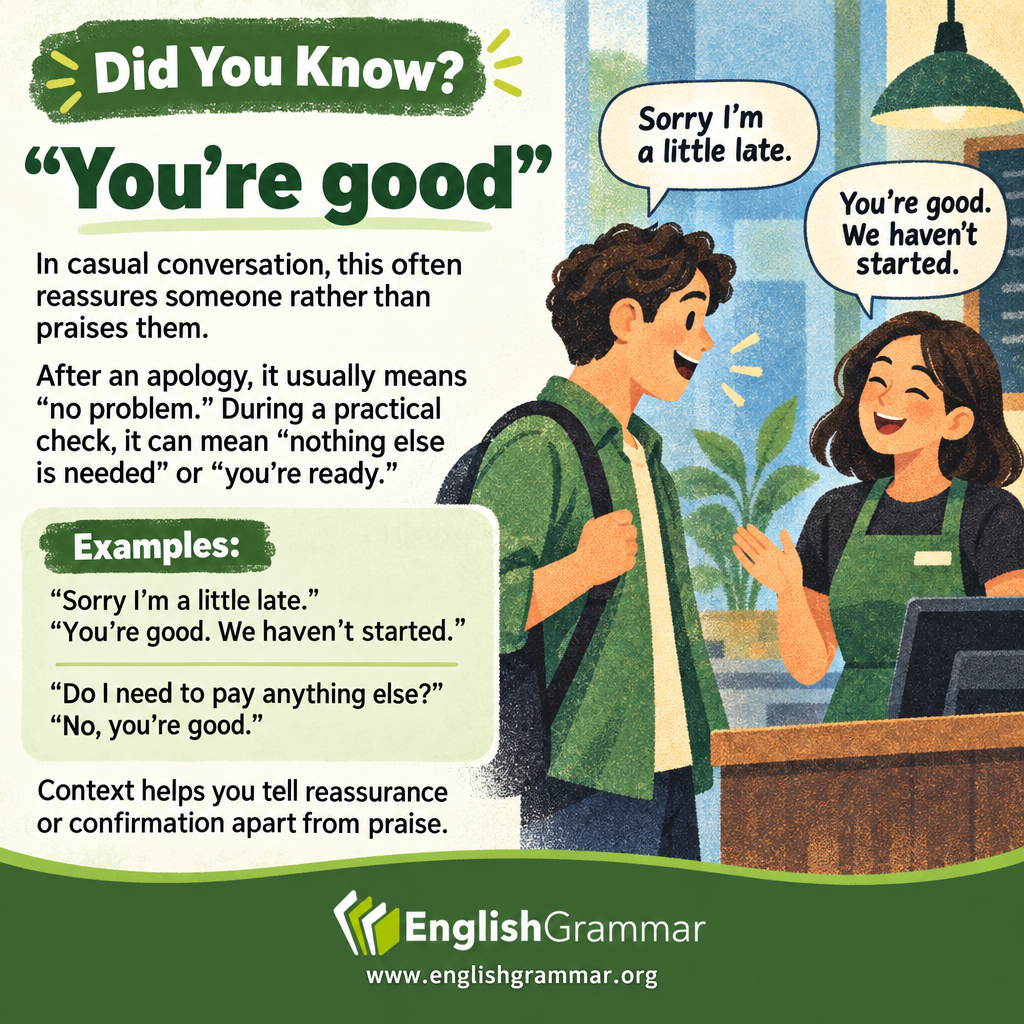
“You’re good” does not always praise someone’s character or ability. In casual conversation, it often responds to a small worry or confirms that everything is ready. The situation helps you understand the message.
After an apology, it often means “no problem.” The speaker is saying that they are not upset or that the mistake does not need more attention.
“Sorry I bumped into you.” “You’re good. It happens.”
This is informal reassurance, not a judgment about whether the other person is kind or talented.
During a practical check, it can mean “nothing else is needed.” You might hear it after paying, completing a form, or asking whether you need to do anything more.
“Do I need to sign another form?” “No, you’re good.”
Before an activity, it can mean “you’re ready” or “you can proceed.” This use is especially clear in the longer expression “you’re good to go.”
“I’ve checked your ticket. You’re good to go.”
The phrase can still express praise. For example, “You’re good at explaining things” clearly refers to a skill. Without that extra detail, listen to what came before: an apology suggests reassurance; a question about the next step suggests confirmation. Tone matters too, especially if the speaker sounds sarcastic rather than reassuring.