
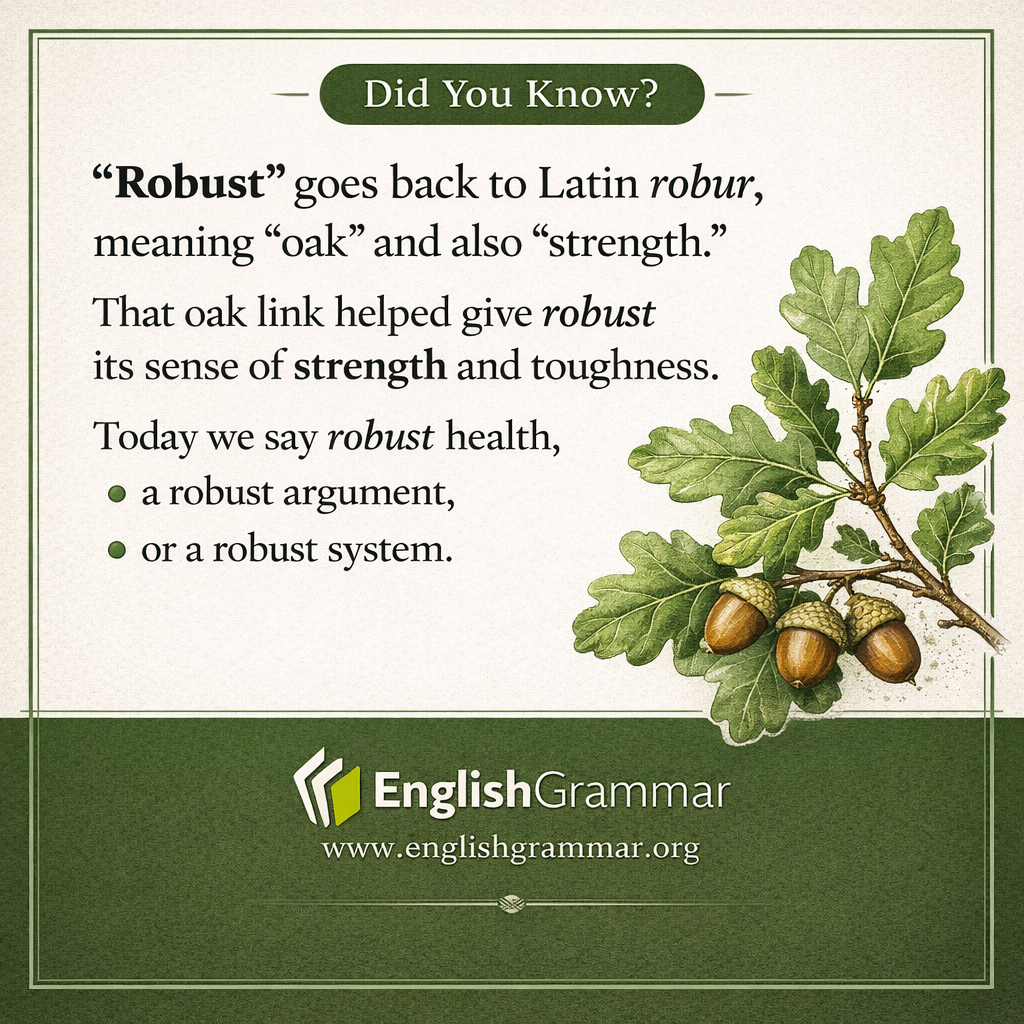
Robust comes from the Latin word robur, which meant both oak and strength. That pairing is not accidental. Oaks were long associated with hardness, durability, and physical power, so the word naturally developed a broader sense of firmness and toughness.
Through Latin robustus, meaning strong or hardy, English eventually got robust. The modern meaning still reflects that older image of oak like strength.
Today, robust is used in several common ways:
- For people or health: robust health means strong, vigorous health.
- For arguments or evidence: a robust argument means solid and well supported.
- For systems or methods: a robust system means reliable and able to handle stress or change.
So when something is called robust, the idea is not just “good” or “large.” It suggests strength, resilience, and the ability to hold up well, much like the oak that sits behind the word’s history.