
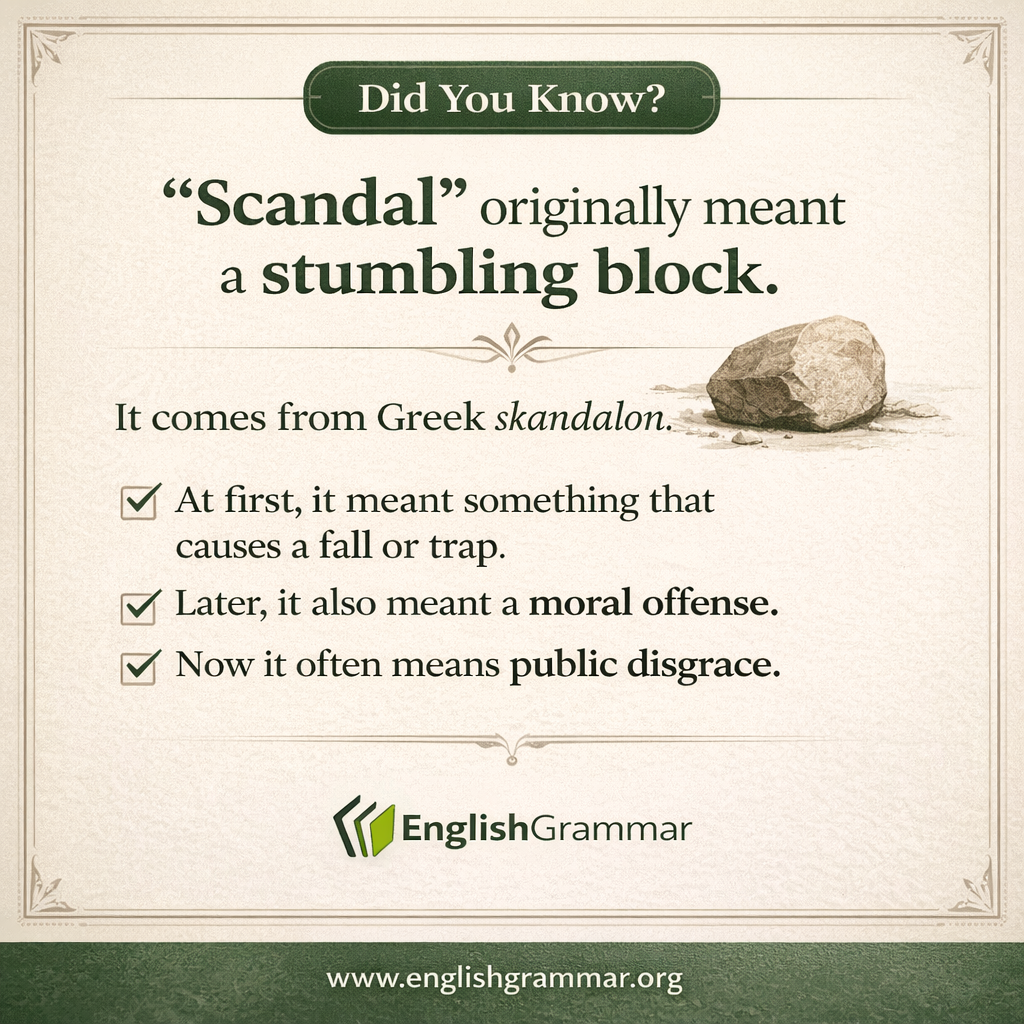
Scandal did not originally mean celebrity gossip or political disgrace. It began with the sense of a stumbling block, something that makes a person fall, fail, or get trapped.
The word comes from Greek skandalon, which referred to a trap, snare, or obstacle. In early religious and moral writing, this idea became more figurative. A scandal could be something that leads a person into error or wrongdoing, not just a physical obstacle in the road.
That older meaning helps explain the later one. If a person or action became a moral stumbling block, it could be called a scandal. From there, English developed the modern sense: an act or event that causes public shock, shame, or outrage.
- Early sense: a stumbling block or trap.
- Moral sense: something that leads people into wrongdoing.
- Modern sense: public disgrace, especially involving shocking behavior.
For example, a news story about corruption may be called a scandal today. Centuries ago, the word pointed more directly to the idea of causing someone to stumble, literally or morally.