
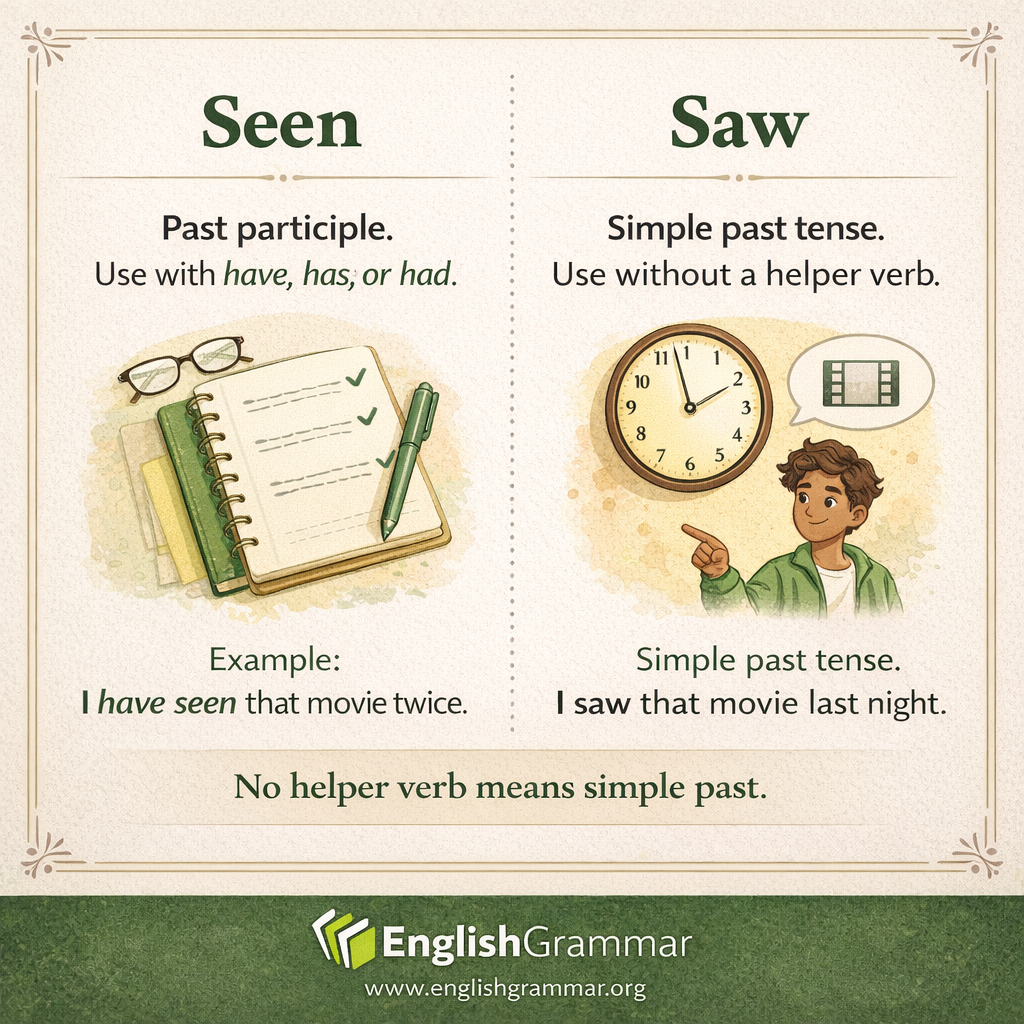
Saw and seen both refer to seeing in the past, but they do not work the same way in a sentence. Saw is the simple past tense. It can stand by itself as the main verb.
- I saw your message this morning.
- We saw a fox near the trail.
Seen is the past participle. It normally needs a helper verb, usually have, has, or had. Without that helper, the sentence sounds incomplete in standard English.
- I have seen your message.
- She has seen that film before.
- They had seen the warning before they left.
A quick test is to look for the helper verb. If the sentence uses have, has, or had, use seen. If the sentence simply tells what happened in the past and has no helper verb, use saw.
- Correct: I saw him yesterday.
- Correct: I have seen him before.
- Not standard: I seen him yesterday.
Questions and negatives follow another pattern. Use did with the base verb see: Did you see it? I did not see it.
In casual speech, some people say I seen, but it is not considered standard in formal writing, schoolwork, or professional communication.