
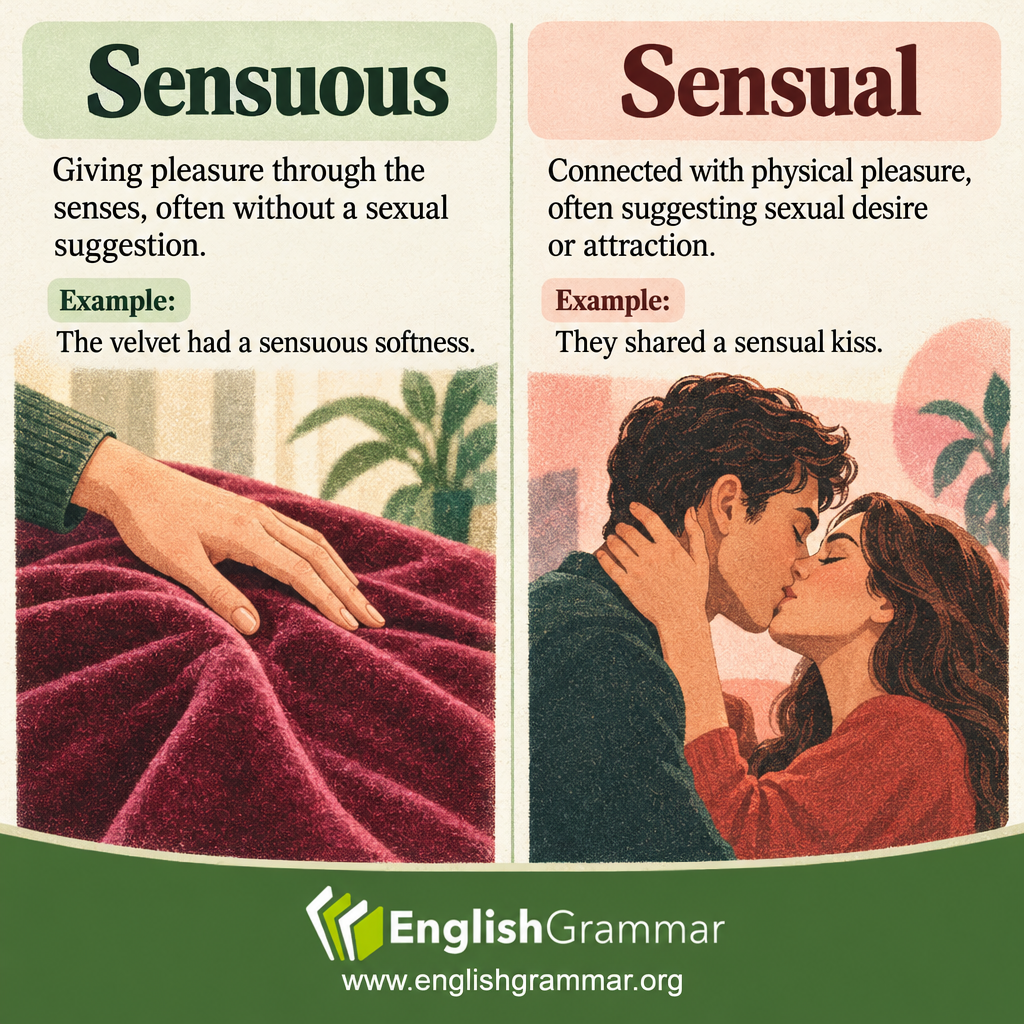
Sensuous and sensual both describe experiences connected with the senses and pleasure. The useful difference is what each word usually suggests, not a strict division between two unrelated meanings.
Sensuous emphasizes pleasure through sight, sound, smell, taste, or touch. It often describes art, music, food, or pleasant textures without suggesting sexual attraction. Choose it when you want readers to notice the richness of a sensory experience.
- The music’s warm tones created a sensuous atmosphere.
- The garden offered a sensuous mix of colors and fragrances.
Sensual emphasizes physical pleasure and often suggests sexual desire or attraction. It is common in descriptions of intimate experiences, movements, or expressions. Choose it when that suggestion fits what you mean.
- The couple shared a slow, sensual dance.
- The actor gave her a sensual smile.
The meanings overlap. Sensual does not always mean sexual: it can describe enjoyment of food, warmth, or other bodily pleasures. Likewise, sensuous can appear in romantic or erotic descriptions. The surrounding words help readers understand the intended meaning.
For example, calling a fragrance sensuous draws attention to its rich, pleasing smell. Calling it sensual may suggest attraction or intimacy. Neither choice is automatically wrong, but the tone changes. If you are describing pleasant sights, sounds, or textures and want to avoid a sexual suggestion, sensuous is usually the clearer choice.