
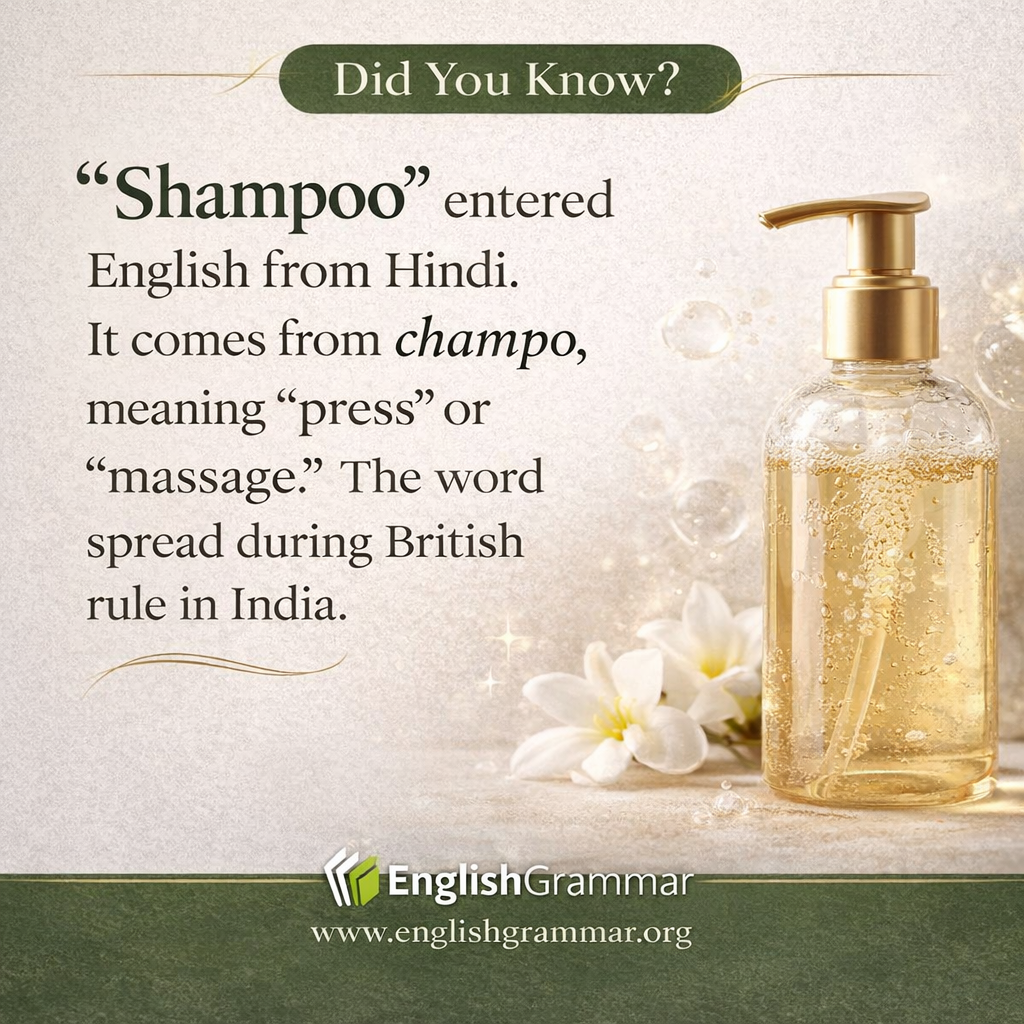
Shampoo feels like a modern bathroom word, but it has a long travel story. English borrowed shampoo from Hindi, where champo means “press” or “massage.” Early uses in English were connected to massage and bath treatments, not only hair products.
The borrowing is tied to British involvement in India. When English speakers encounter useful words for new experiences, foods, customs, or objects, they often adopt them with changed spelling and pronunciation. Over time, the meaning can narrow or shift. In this case, a word linked to massage and washing became closely associated with washing hair.
Here are a few ways you can see the borrowed word working in modern English:
- I need to buy shampoo focuses on the product, not the action.
- Shampoo your hair twice uses the same word as a verb.
That verb use is another common English pattern: a borrowed noun can become a verb when it fits everyday speech. Compare I shampooed my hair with older meanings tied to massage. The core idea of rubbing and cleansing is still there, even after the word’s journey across languages.
