
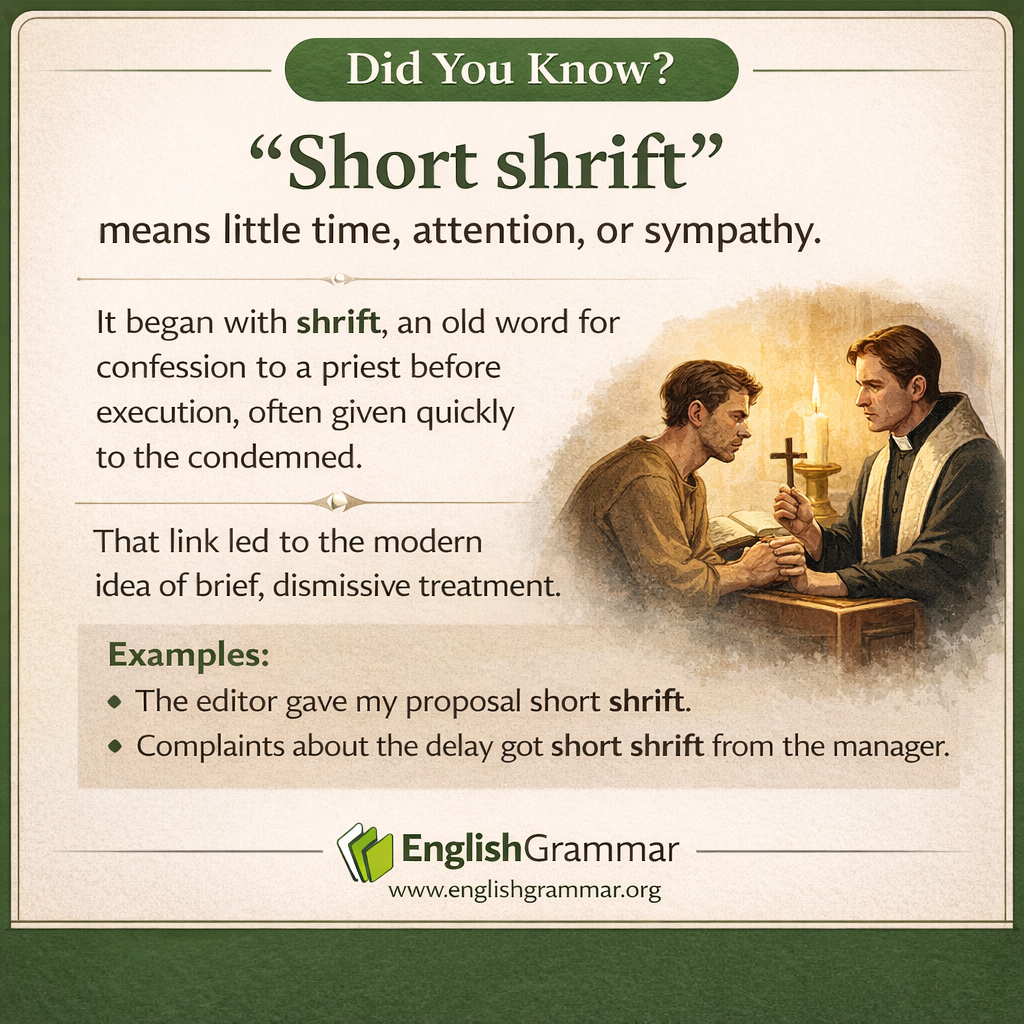
Short shrift now means very little time, attention, patience, or sympathy. If a person or idea gets short shrift, it is handled quickly and dismissively rather than carefully.
The phrase comes from shrift, an old word for confession or absolution given by a priest. In earlier times, a condemned person might receive a very brief confession before execution. Because that religious preparation was sometimes rushed, short shrift came to suggest something given too little time.
Today, the phrase is usually not religious at all. It is a figurative way to say that someone was brushed aside or not taken seriously.
- The committee gave our concerns short shrift and moved to the next item.
- He expected sympathy, but his excuse got short shrift.
You will often see it with complaints, proposals, objections, and excuses. In each case, the idea is the same: the subject received brief and unsympathetic treatment.