
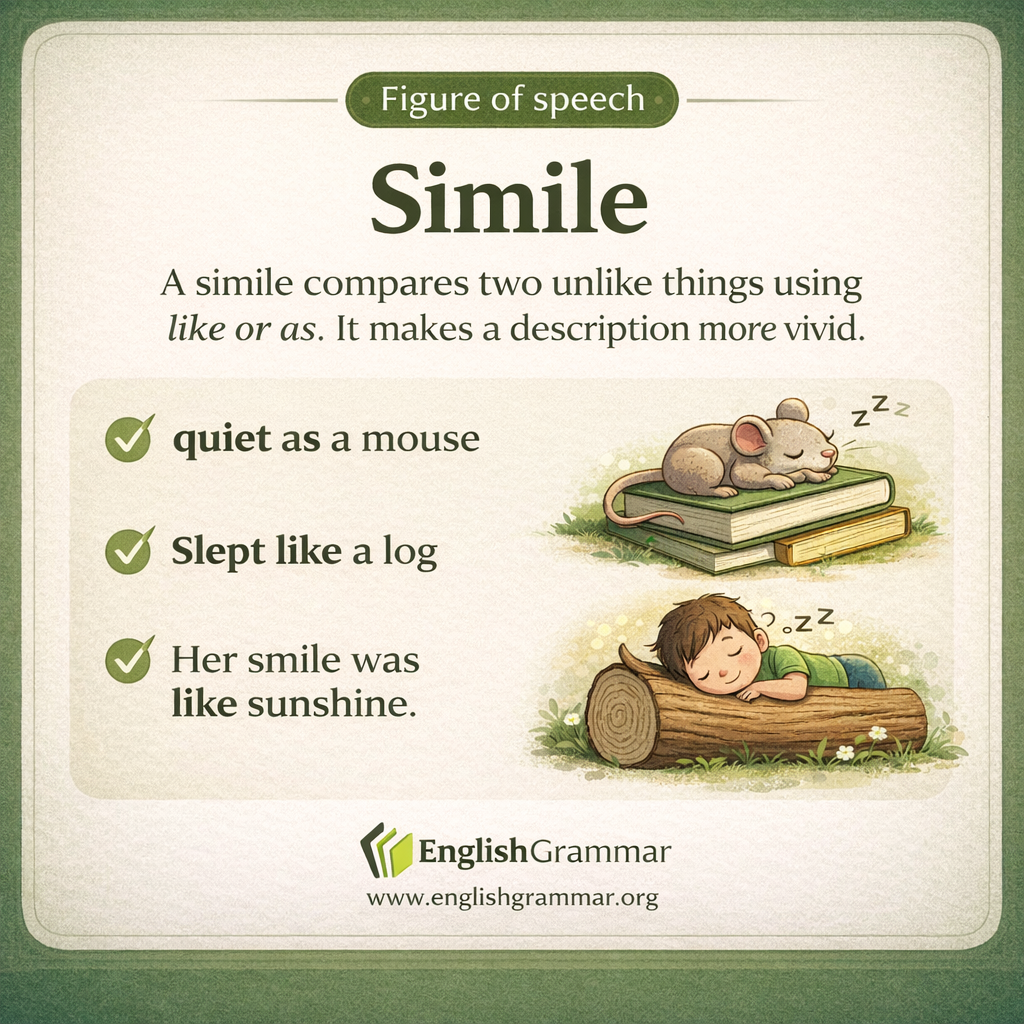
A simile is a figure of speech that compares two unlike things using like or as. Writers use similes to make descriptions clearer, stronger, and easier to imagine.
For example, if you say, Her smile was like sunshine, you are not saying her smile is literally sunlight. You are comparing the warmth or brightness of her smile to sunshine. That comparison helps the reader feel the image more quickly.
Similes often follow a few common patterns:
- as + adjective + as: quiet as a mouse
- verb + like: slept like a log
- is or was like: The water was like glass
What makes a simile work is the shared quality between the two things being compared. In The water was like glass, the shared quality is smoothness and stillness.
It also helps to contrast a simile with a metaphor. A simile says one thing is like another. A metaphor says one thing is another. For example, He ran like the wind is a simile. He was the wind is a metaphor.
When used well, similes add color and precision without making a sentence hard to understand.
