
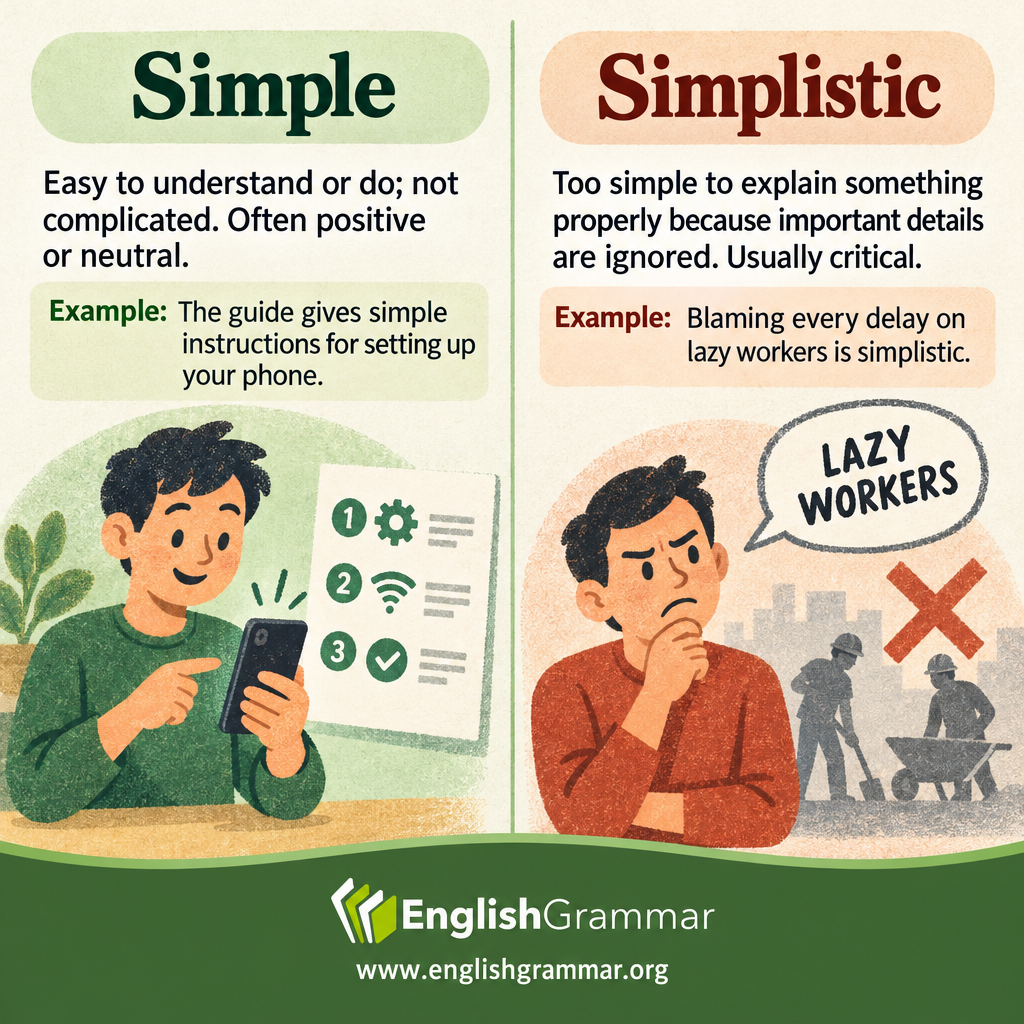
Simple and simplistic both relate to a lack of complexity, but they express different judgments. They are not usually interchangeable.
Simple means easy to understand or do, or not complicated. It is often positive or neutral. A simple explanation can make a difficult subject clear while still including the information people need.
- The teacher used a simple diagram to explain how the heart works.
- The application process is simple and takes only five minutes.
Simplistic means treating something as less complicated than it really is and leaving out important details. It usually expresses criticism: the explanation or solution sounds easy, but it does not deal properly with the problem.
- His simplistic advice to spend less ignored the family’s rising rent.
- The article gave a simplistic account of why people lose their jobs.
The key question is whether the explanation keeps the details that matter. If someone explains a difficult topic clearly and accurately, simple is usually the better choice. If they ignore important causes, limits, or differences, simplistic may fit.
Be especially careful when giving compliments. Calling a colleague’s presentation simple can praise its clarity, depending on context. Calling it simplistic usually suggests that their treatment of the subject was inadequate. For an unmistakable compliment, you can say it was clear and easy to follow.