
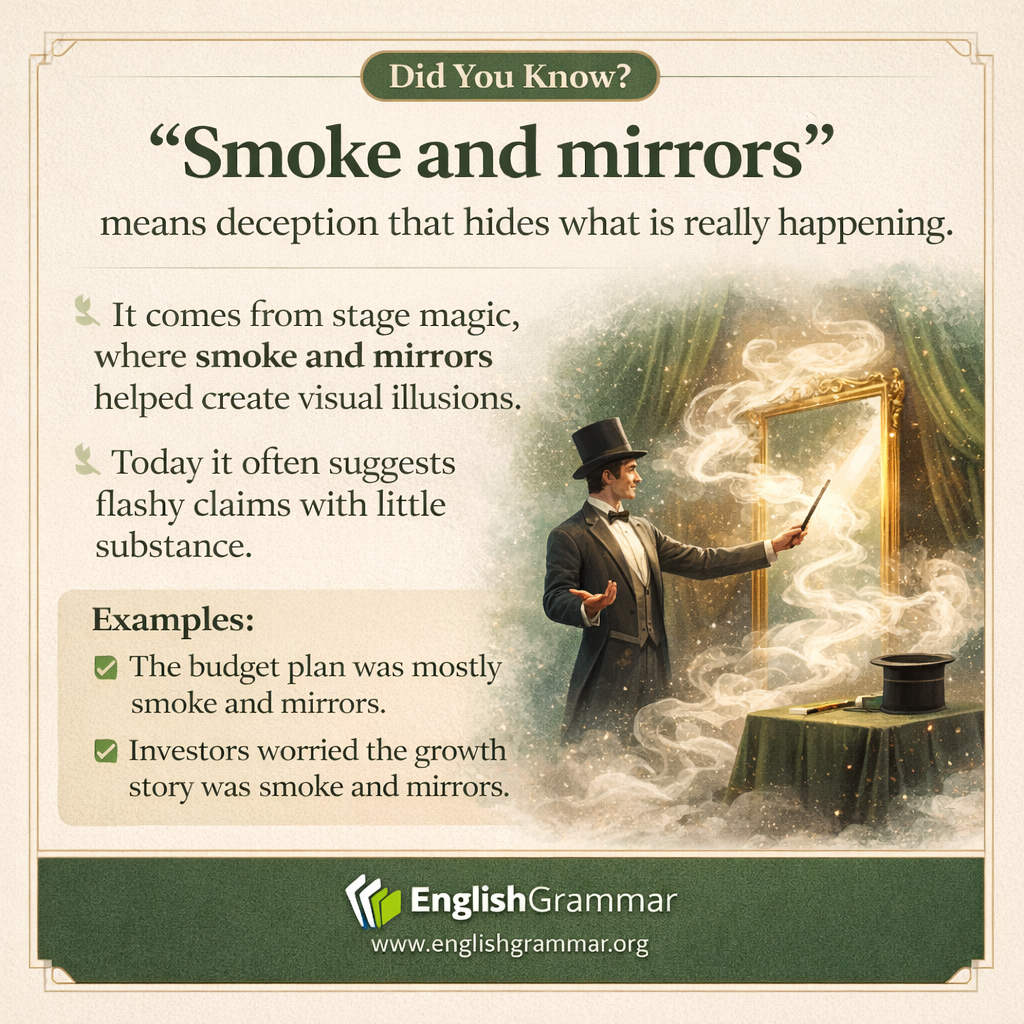
“Smoke and mirrors” is an idiom for deception or for effects that distract people from what is really happening. It usually suggests that something looks impressive on the surface but does not hold up when examined closely.
The expression comes from stage magic. Magicians used mirrors, controlled lighting, and sometimes smoke or similar visual effects to hide movements and create illusions. Because the audience could not clearly see what was happening, the trick seemed mysterious and convincing. That link explains the modern meaning: something is designed to mislead by controlling what people notice.
Today, people often use the phrase for business, politics, advertising, or public messaging.
- The report looked detailed, but much of it was smoke and mirrors.
- Critics said the new policy was just smoke and mirrors, not real reform.
- Her presentation was clear and direct, with no smoke and mirrors.
The phrase is usually negative. It implies that appearances are being used to cover weakness, confusion, or dishonesty. In plain terms, if something is called “smoke and mirrors,”strong> the speaker believes it is meant to impress or distract rather than reveal the truth.
