
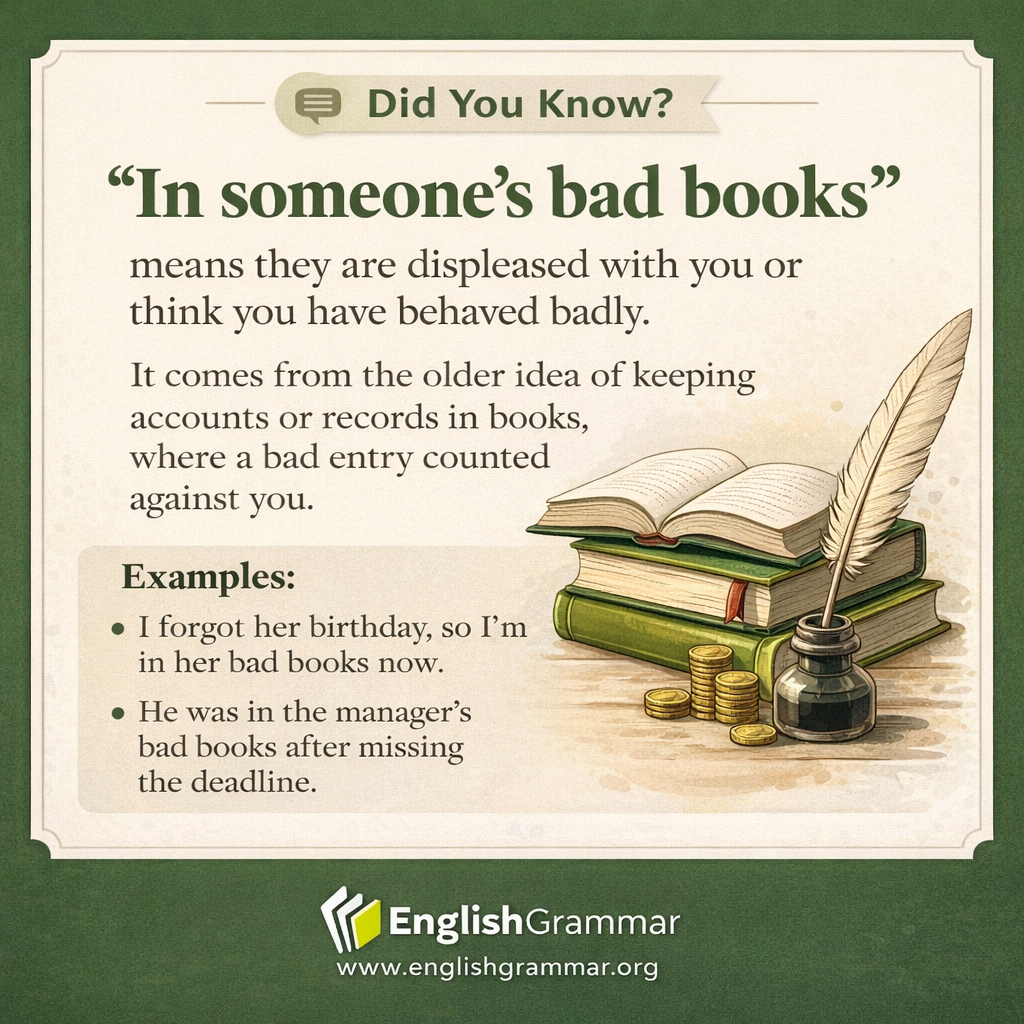
In someone’s bad books means that a person is annoyed with you, disappointed in you, or thinks you have behaved badly. If you are in their good books, the opposite is true.
The image behind the idiom is old but easy to understand. In earlier times, books often meant written records, such as account books or official lists. If your name or actions were recorded badly, that counted against you. From that idea, being in a person’s bad books came to mean being viewed unfavorably by them.
This expression is common in British English and is also understood in other varieties of English. It usually appears after something has gone wrong, such as forgetting an important event, breaking a rule, or disappointing someone.
- I forgot her birthday, so I’m in her bad books now.
- He was in the manager’s bad books after missing the deadline.
- After I returned the car late, I was definitely in my brother’s bad books.
You can also compare it with in someone’s good books, which means they approve of you. Together, the pair helps learners remember the meaning clearly.