
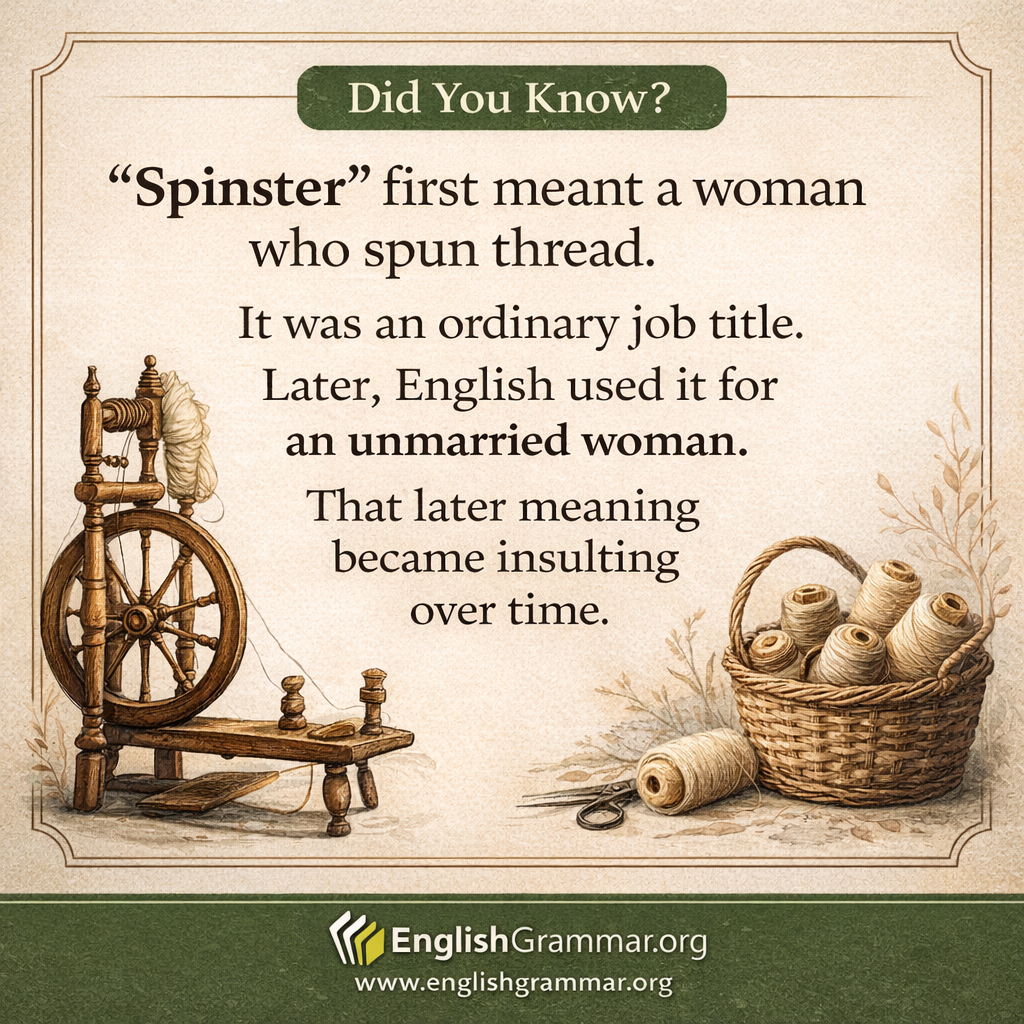
Spinster originally had nothing to do with personality or social status. In earlier English, it simply meant a woman who spun thread into yarn. Spinning was common and economically important work, so the word began as an ordinary occupational term.
Later, the meaning broadened. Spinster came to be used for an unmarried woman, especially in legal or formal records. For example, a document might identify someone as “Anne Smith, spinster,” meaning she was unmarried, not that spinning was her job.
Over time, that later sense picked up a negative tone. Instead of sounding neutral or descriptive, it started to suggest an older unmarried woman in a dismissive way. That is why the word often feels outdated or insulting today.
This kind of shift is common in language. A word can begin as a neutral label and slowly take on social judgment.
- Original meaning: a woman who spins thread
- Later formal meaning: an unmarried woman
- Modern tone: often old fashioned or insulting