
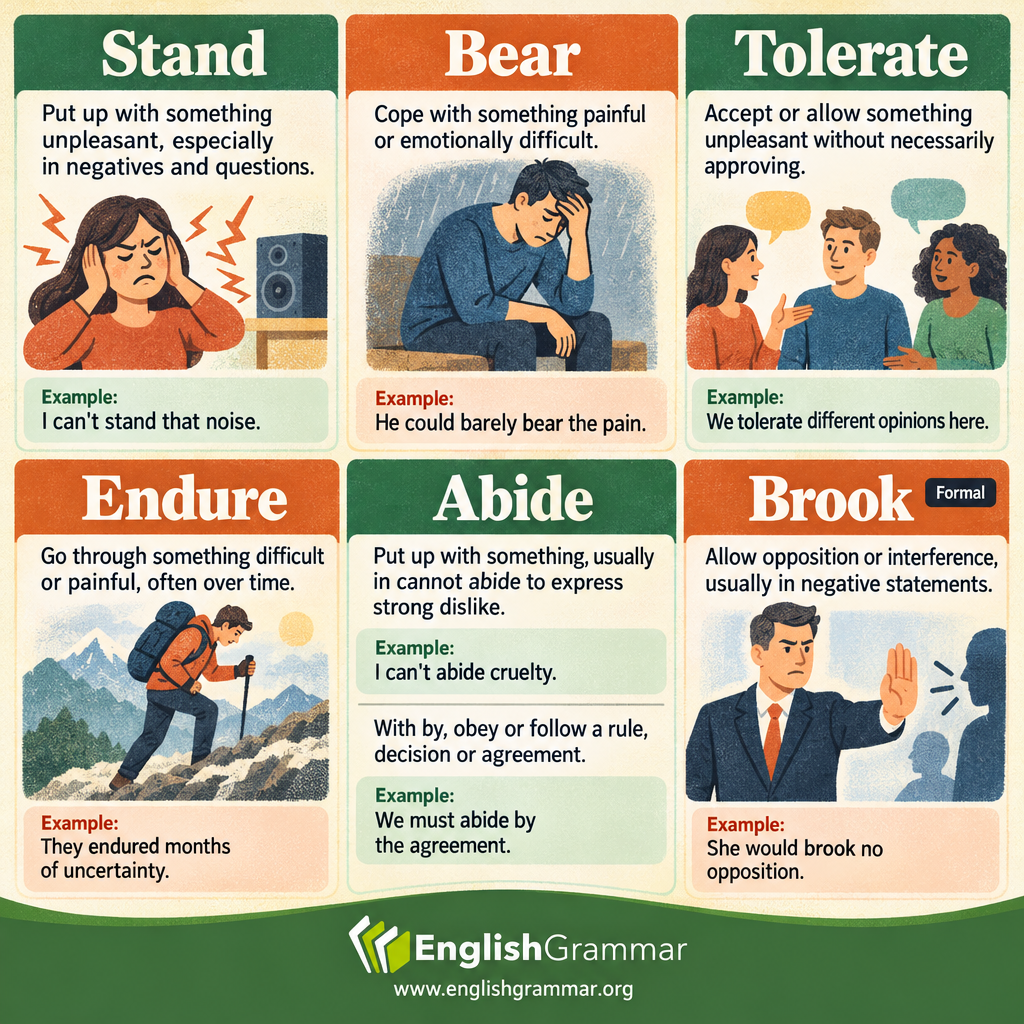
These six verbs overlap when we talk about unpleasant experiences, but they differ in emphasis, tone and common sentence patterns. They are not interchangeable in every context.
- Stand is common in everyday speech, especially in negatives and questions. It means to put up with something unpleasant: I can’t stand his constant complaints. A following verb usually takes the -ing form: Can you stand working here?
- Bear often emphasizes how emotionally or physically difficult something is: She could hardly bear the disappointment. Both bear doing and bear to do are possible.
- Tolerate can mean accepting or allowing something you dislike, without approving of it: The manager tolerates occasional mistakes. It can also describe putting up with discomfort.
- Endure emphasizes going through something difficult, often over time: The hikers endured days of freezing rain. It focuses on the experience, not permission.
- Abide, in the expression can’t abide, expresses strong dislike: I can’t abide people interrupting me. The separate phrase abide by means to obey or follow: All players must abide by the rules.
- Brook is formal and usually appears in negative statements about refusing to allow opposition or interference: The director would brook no interference. It is uncommon in casual conversation.
Context matters: disliking a noise, surviving hardship and refusing opposition involve different choices, even though all six verbs can relate to accepting something unwelcome.