
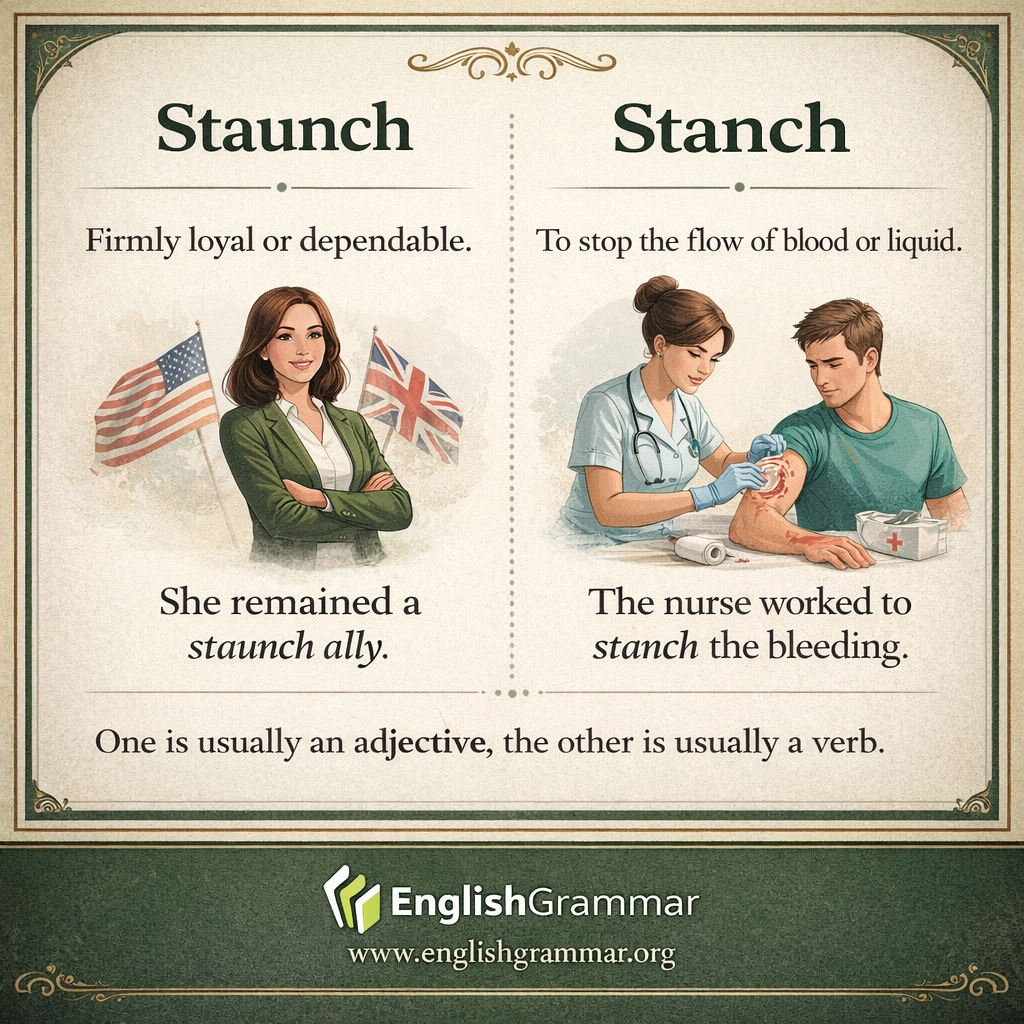
Staunch and stanch sound alike, but they do different jobs in a sentence.
Staunch usually means firmly loyal, committed, or dependable. It is most often used as an adjective. You might describe a person, supporter, or ally this way. Example: She remained a staunch ally during the crisis.
Stanch usually means to stop the flow of something, especially blood or liquid. It is most often used as a verb. Example: The nurse worked to stanch the bleeding.
A simple way to remember the difference is this:
- Use staunch when talking about strong support or loyalty.
- Use stanch when talking about stopping a flow.
Although staunch has sometimes been used as a variant spelling of stanch, modern standard usage usually keeps them separate. In most writing, staunch is the adjective for loyalty, and stanch is the verb for stopping blood or liquid.