
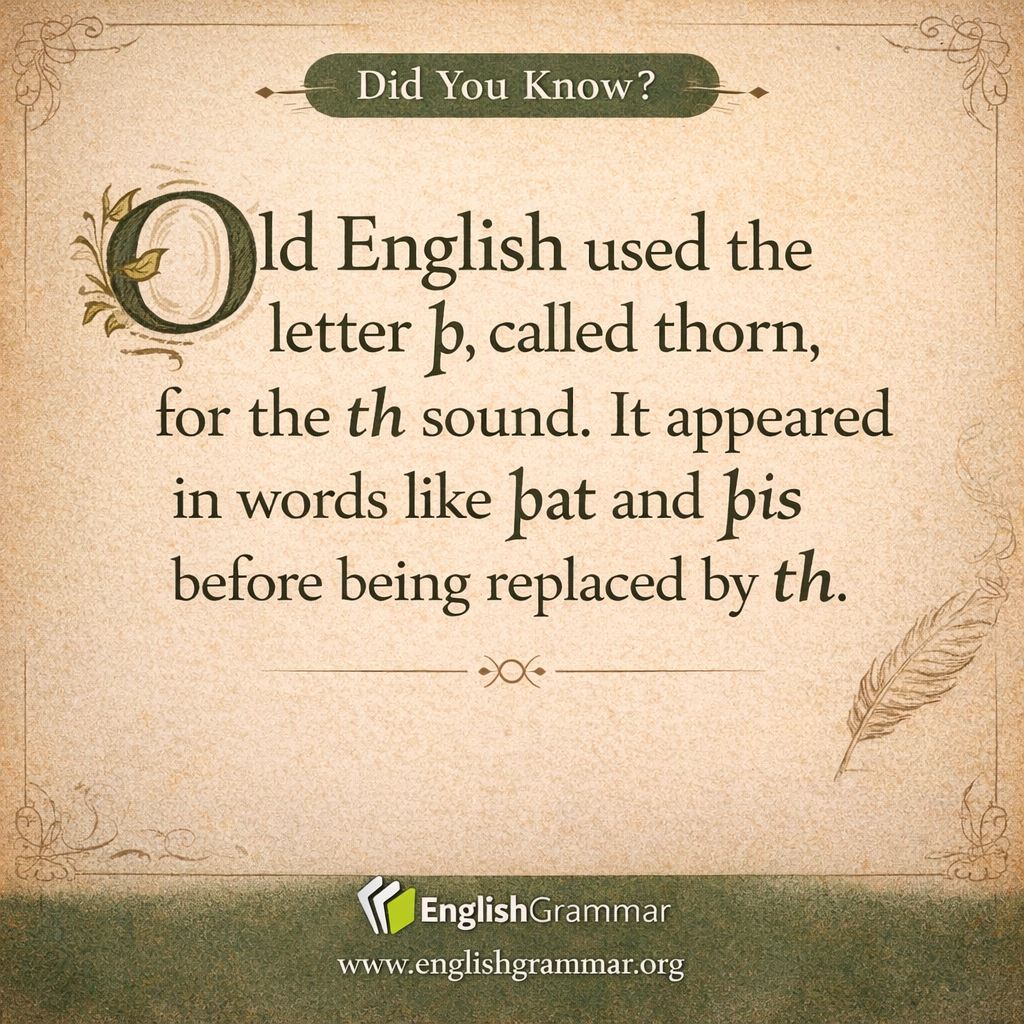
Modern English writes th, but earlier English often used a single letter for that sound: þ, called thorn. Thorn was common in Old English and continued into parts of Middle English. You can see it in manuscripts where familiar words look slightly strange, such as þat for that and þis for this.
Thorn represented the same basic sound we spell with th today. Over time, English spelling became more standardized, and the two letter spelling th increasingly replaced thorn. One reason is practical: early printers in England often used type imported from continental Europe, and those fonts did not always include the letter þ. When a character is missing from the available type, spelling tends to shift toward what printers can reliably set.
Here is a simple contrast:
- Older style: “I saw þe man.”
- Modern spelling: “I saw the man.”
Sometimes you may see “ye” in old looking signs. That visual style can come from thorn being misread as the letter y in later typefaces. In speech, it was still the, not yee.
