
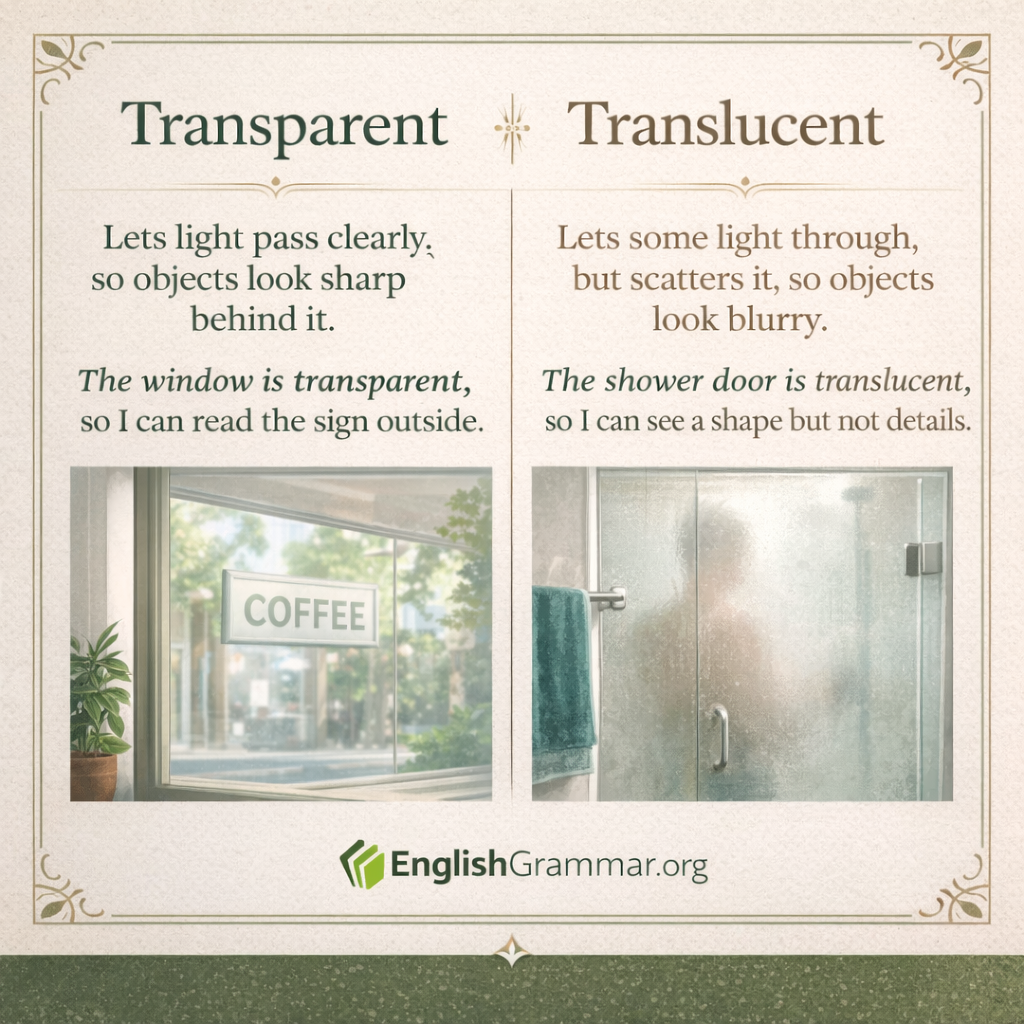
Transparent and translucent both describe how light passes through a material, but they are not the same.
Transparent means light passes through clearly. You can see objects on the other side with little or no blur. Clear glass is a common example. If a window is transparent, you can read a sign outside it.
Translucent means some light passes through, but the material scatters that light. You can tell that something is behind it, but you cannot see sharp details. Frosted glass is a common example. If a shower door is translucent, you may see a person’s outline, but not their face clearly.
- Use transparent for clear visibility.
- Use translucent for partial visibility.
A quick test helps: if you can see through it clearly, use transparent. If light comes through but the view is blurry, use translucent.