
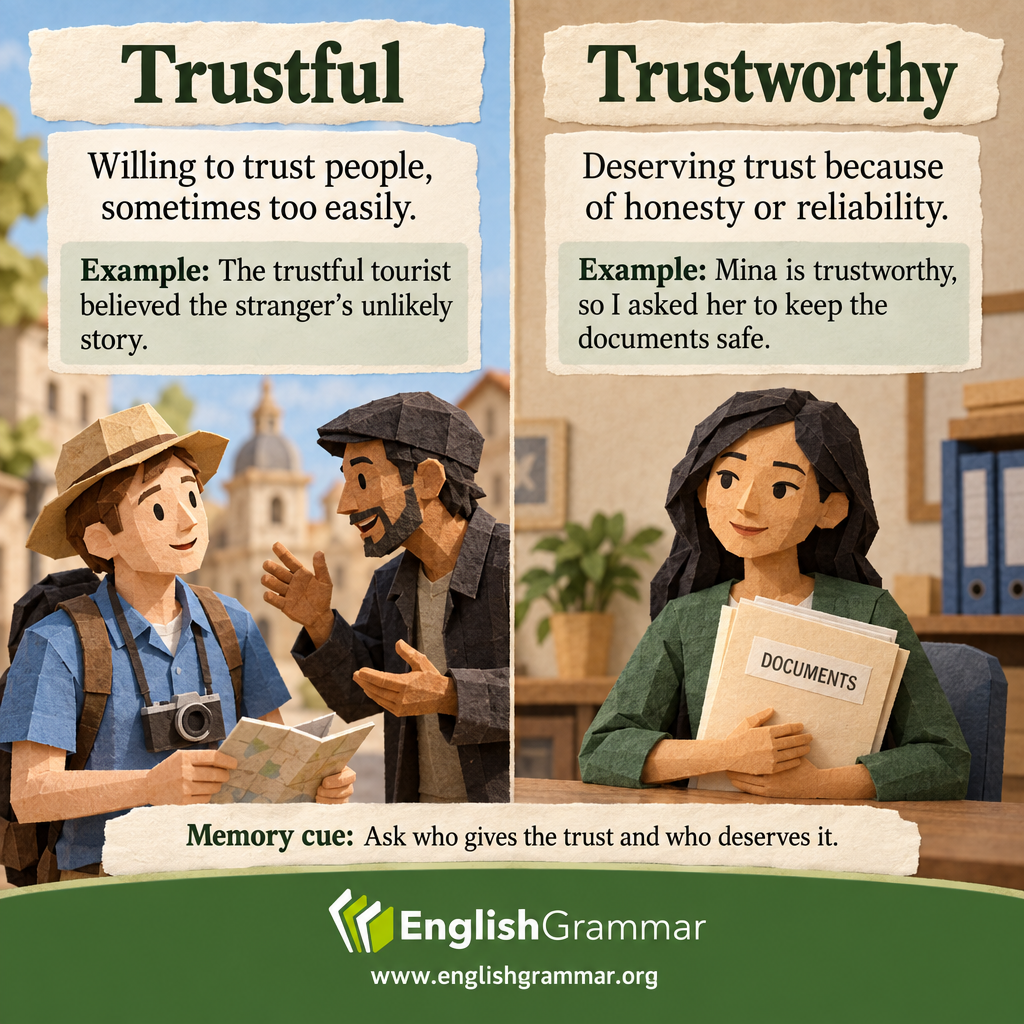
Trustful describes a person who is willing to trust others. It can be neutral, but it often suggests that the person trusts too quickly or without enough evidence. For example, The trustful tourist believed the stranger’s unlikely story. Here, the focus is on the tourist’s readiness to believe.
Trustworthy describes a person or thing that deserves trust because it is honest, dependable, or safe. It normally has a positive meaning. For example, Mina is trustworthy, so I asked her to keep the documents safe. The sentence says Mina has qualities that justify confidence in her.
The key contrast is the direction of trust: a trustful person gives trust, while a trustworthy person has earned it. These qualities do not always occur together. Someone may be trustful but not trustworthy, or trustworthy but cautious about trusting others.
- Choose trustful when the subject readily believes or relies on other people: Young children can be very trustful.
- Choose trustworthy when the subject can reasonably be believed or relied on: This website is trustworthy because it checks its facts carefully.
In everyday English, trusting is often more common than trustful: She has a trusting nature. However, trustful is correct when you mean willing or inclined to trust. Do not use trustworthy merely because someone trusts easily; use it only when that person or thing merits trust.