
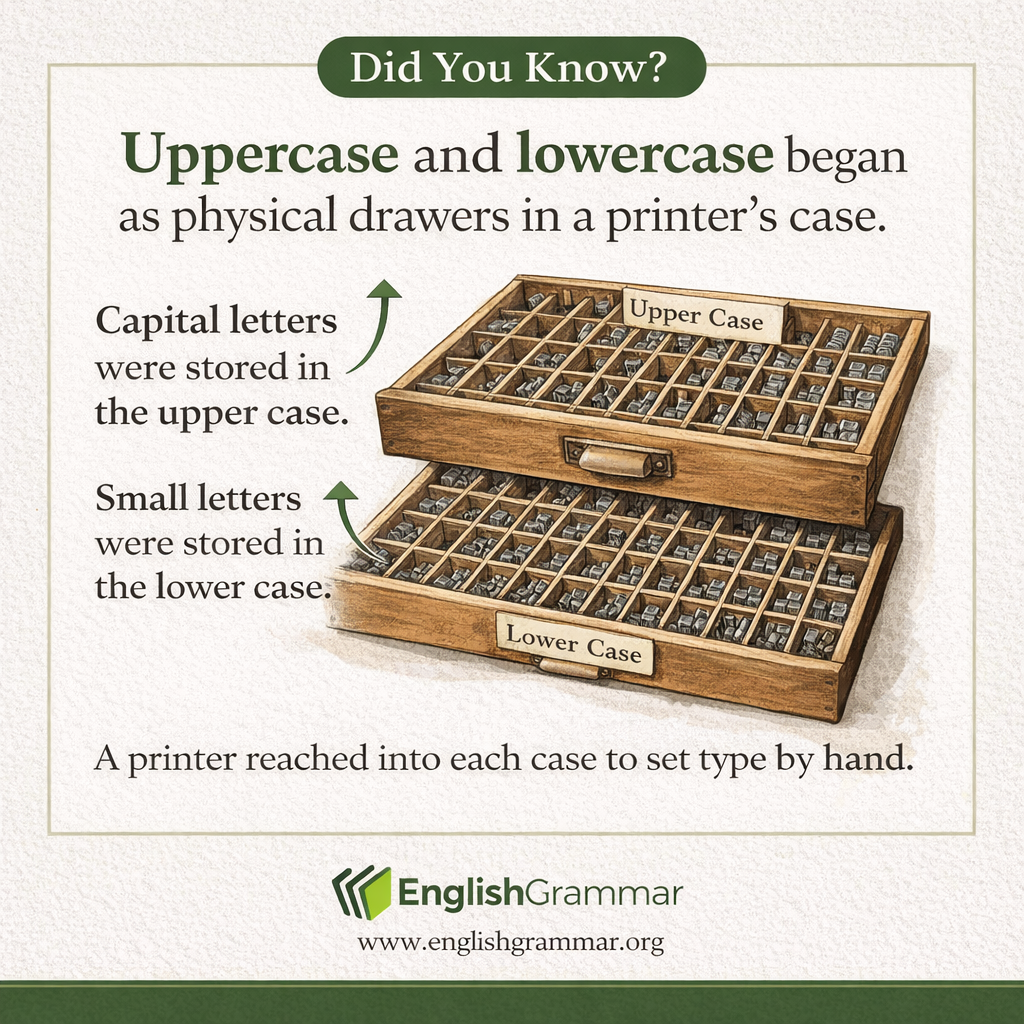
Uppercase and lowercase started as practical printing terms. In traditional hand printing, individual metal letters were stored in a wooden cabinet called a case. The capital letters were usually kept in the upper section, and the smaller letters were kept in the lower section.
That layout helped printers work quickly. When they set type by hand, they picked one metal letter at a time and arranged the letters to form words and sentences. Because the capitals were in the upper case and the small letters were in the lower case, those storage names eventually became the language terms we still use today.
For example, in the word London, the L is uppercase and the rest are lowercase. In a full title like The Great Gatsby, some style guides use uppercase for important words and lowercase for shorter function words, depending on the style.
- Uppercase: A, B, C
- Lowercase: a, b, c
- Origin: real printer’s cases, not a later grammar invention
