
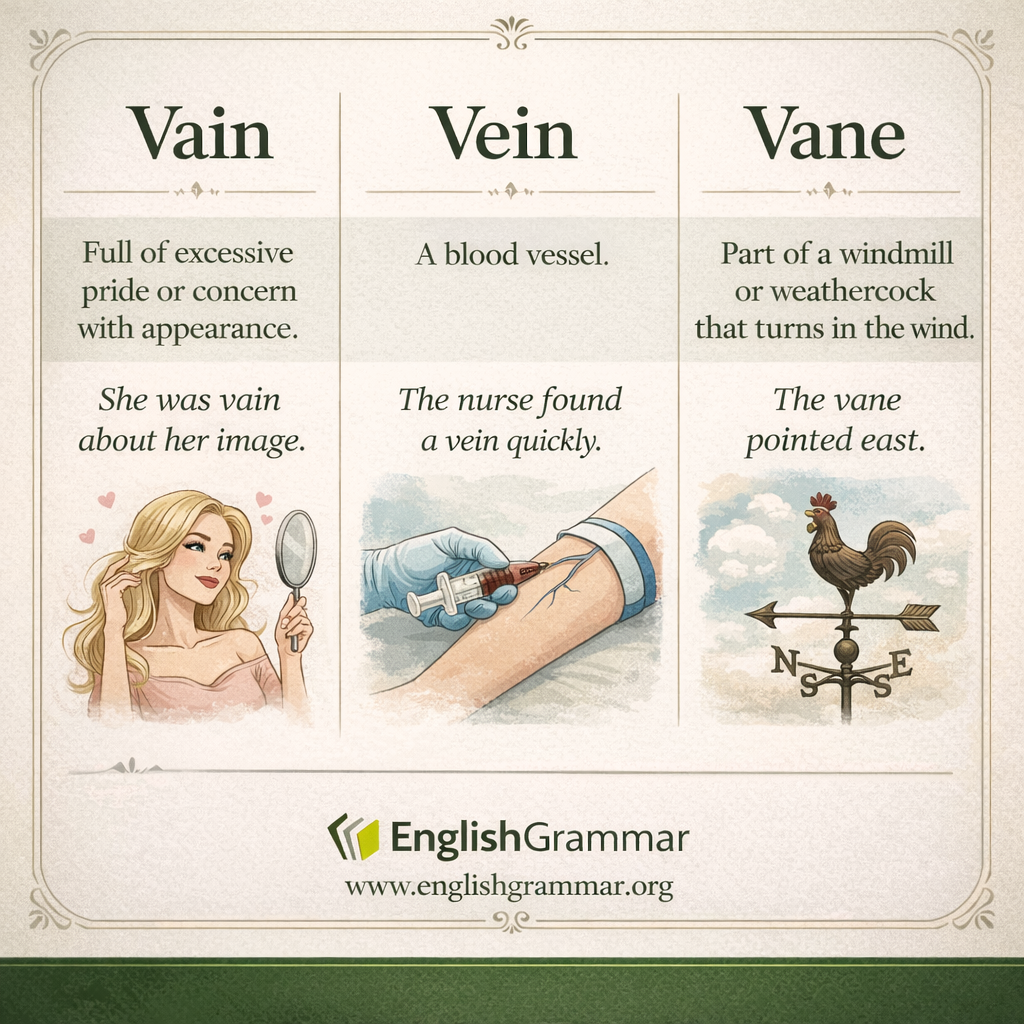
Vain, vein, and vane are homophones, which means they sound alike but have different meanings and spellings.
Vain is usually an adjective. It describes someone who is too proud of looks, abilities, or status. You might say, She was vain about her new haircut. It can also appear in the phrase in vain, which means without success.
Vein is a noun. It most often means a blood vessel that carries blood through the body. For example, The doctor found a vein easily. It can also refer to a streak or layer in rock.
Vane is also a noun. It is a flat blade or pointer that turns in the wind, as on a weather vane or windmill. For example, The vane swung north as the wind changed.
- Use vain for pride or lack of success in in vain.
- Use vein for blood vessels or natural streaks.
- Use vane for something that turns to show wind direction.
A quick memory tip helps: vein relates to the body, vane relates to wind, and vain relates to ego.