
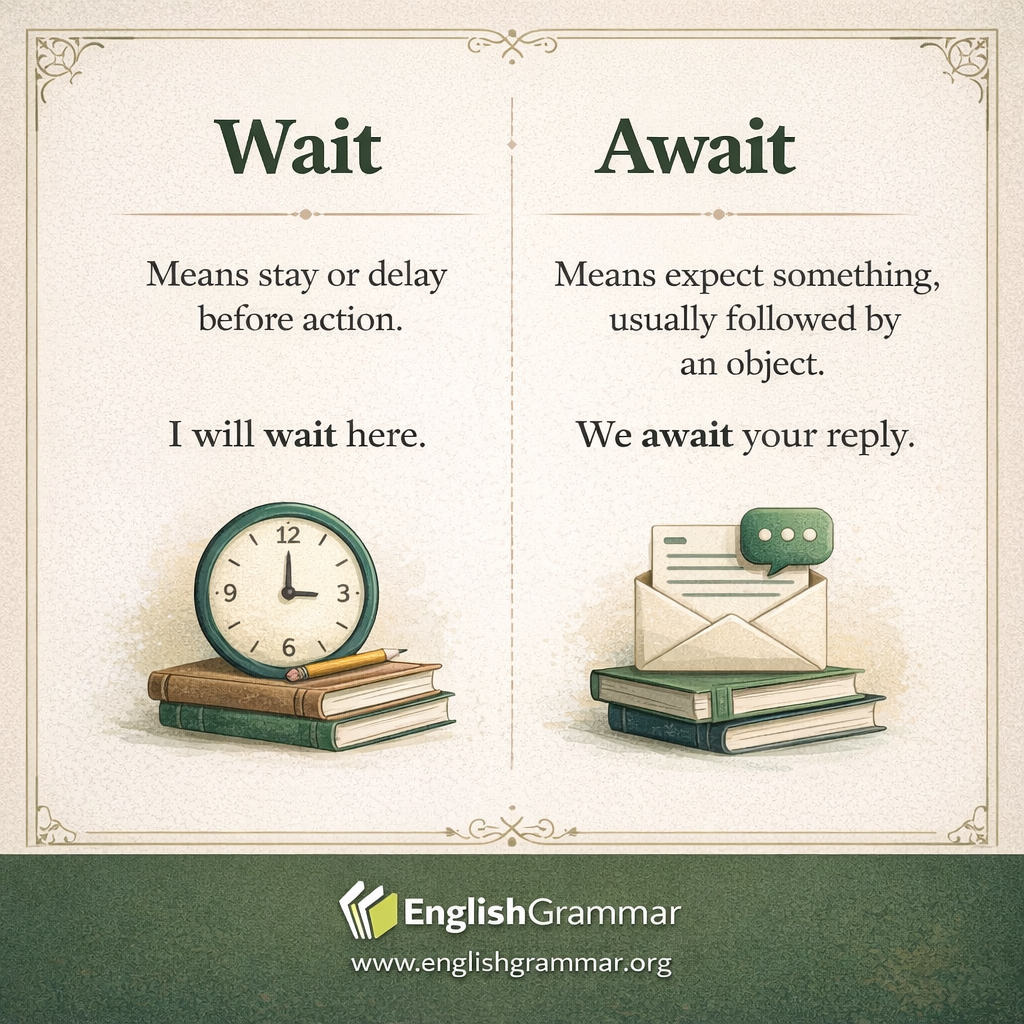
Wait and await are close in meaning, but they are not used the same way.
Wait usually means to stay where you are or delay action until something happens. It often appears alone or with words like for and to. For example: I will wait here. You can also say, She is waiting for the bus.
Await means to expect or wait for something, and it usually takes a direct object. For example: We await your reply. Another example is, A decision awaits the committee.
A common mistake is using them in the same structure. You can say wait for the results, but not await for the results. With await, the object comes directly after the verb: await the results.
- Use wait when no direct object follows, or when you use for.
- Use await when a direct object follows.
- Await often sounds more formal than wait.
If you remember one rule, make it this one: wait for something, but await something.